Best Saltwater Fish for Beginners
Ten hardy saltwater fish that suit a first tank, which ones get along, the order to add them, and popular fish to hold off on.
Updated October 25, 2026 · 8 min read
Your first saltwater fish should forgive the small mistakes every new fishkeeper makes. The ten fish below are hardy, eat ordinary aquarium food and fit a typical first tank of 30–75 gallons (about 115–285 liters). Each one links to its full profile in our Species Guide. If your tank isn’t set up yet, start with How to Start a Saltwater Aquarium.

What makes a fish beginner-friendly
- Hardiness. It copes with small swings in water quality while you learn, and it doesn’t fall sick at the first sign of stress.
- It eats prepared food. It takes frozen foods such as mysis shrimp, plus pellets or flakes, so you never have to grow live food for it.
- A manageable temper. It is peaceful, or its bad moods are predictable and easy to plan around.
- Its adult size fits your tank. Fish are sold small. Plan for the size it will reach, not the size in the store.
- Captive-bred when possible. Fish raised in a hatchery are usually already eating aquarium food and are used to life in a tank. Several fish on this list are commonly sold captive-bred.
Every fish below is rated Easy in its species profile. The sizes and tank sizes come from those profiles. Where other care sheets give a different number, we say so.

Ten good first fish
Ocellaris Clownfish
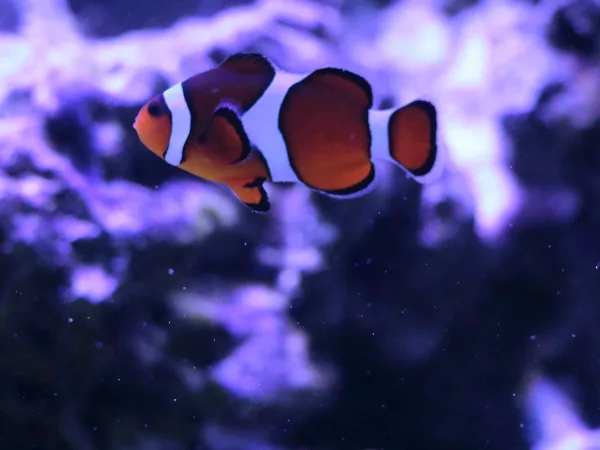
The Ocellaris Clownfish is the classic first fish, and for good reason. Captive-bred ocellaris are among the hardiest marine fish, and they eagerly eat pellets, flakes and frozen foods. Adults reach about 3–4 inches. One fish or a pair can live in a tank as small as 20 gallons. They are peaceful with most tankmates. They don’t need an anemone: many adopt a coral, a rock or a corner of the tank as home instead. Caveat: keep one fish or one pair, added together. Extra clownfish, or a second kind of clownfish, usually means fighting.
Royal Gramma
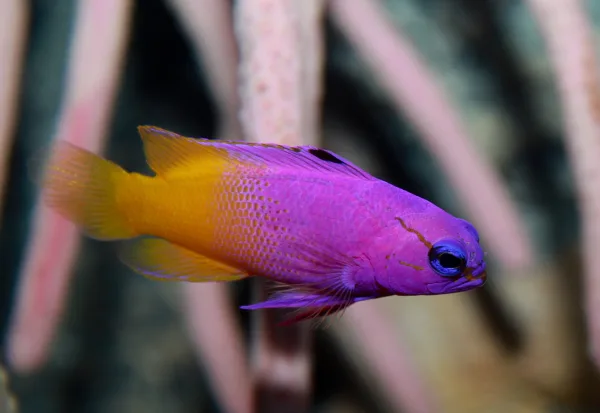
The Royal Gramma is purple in front, yellow behind, and both gentle and tough. It reaches about 3 inches and needs at least 30 gallons. It spends the day hovering near its cave, sometimes upside down under a ledge, which is normal. It eats mysis, enriched brine shrimp and small pellets that drift past its cave. Captive-bred fish are available. Caveat: it guards its cave fiercely. Keep one, and don’t mix it with dottybacks or other purple-and-yellow look-alikes. Use a lid, because it jumps.
Firefish Goby
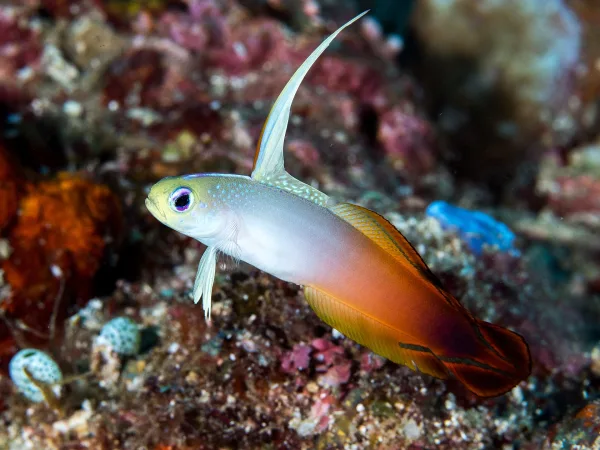
The Firefish Goby hovers above its bolt-hole and flicks its tall front fin like a little flag. It grows to about 3 inches. Our profile suggests a 30-gallon tank, and many care sheets list 20 gallons as the minimum. It is peaceful with other kinds of fish and eats small meaty foods such as mysis and enriched brine shrimp, fed a little at a time. Caveat: it is a famous jumper, so a tight lid with no gaps is a must. Keep one, or a mated pair, and avoid bullies that would chase it into hiding.
Yellow Watchman Goby
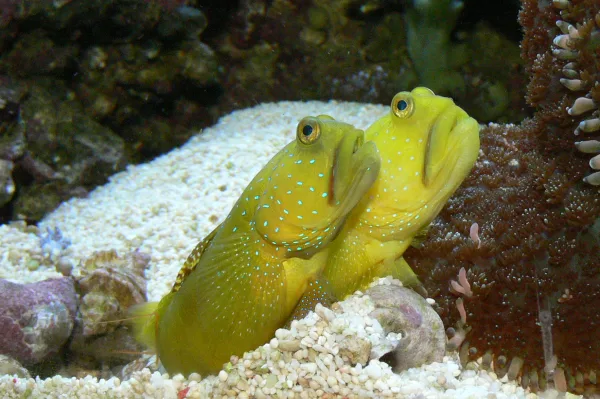
The Yellow Watchman Goby perches at the mouth of its burrow and keeps an eye on the tank. It grows to about 4 inches and needs at least 30 gallons, a sand bed to dig in and a rock ledge for a home. It eats frozen foods and sinking pellets and is peaceful with most fish. It doesn’t need a pistol shrimp partner, but the pair is fun to watch. Captive-bred fish are available. Caveat: new fish may hide for days, and it guards its burrow against other sand-dwelling gobies.
Pajama Cardinalfish
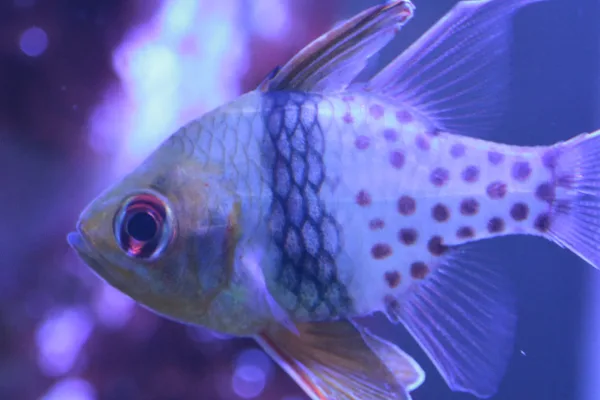
The Pajama Cardinalfish is a calm, slow fish with big eyes, a dark band across its middle and a polka-dot tail. It grows to about 3–3.5 inches. Care sheets list tanks from 20 gallons up. Our profile suggests 30 gallons for a small group, which is how it looks and behaves best. It eats mysis, enriched brine shrimp and small pellets. Caveat: it is shy at feeding time and can lose out to fast eaters, so make sure every fish gets food. It will also eat very small shrimp.
Banggai Cardinalfish
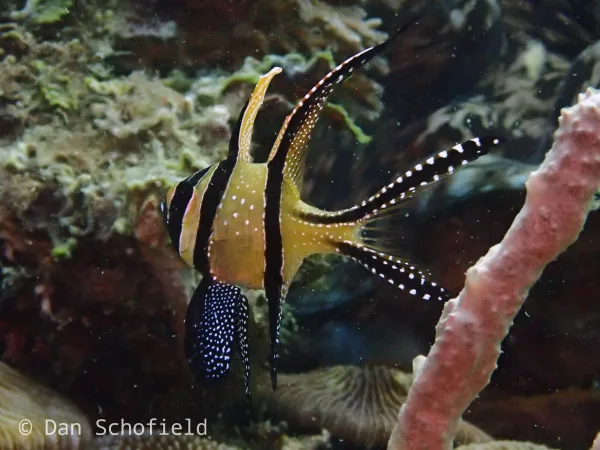
The Banggai Cardinalfish is silver and black with white spots and long, flowing fins. Choose captive-bred fish: they are hardy and eat frozen foods, while wild-caught fish often do poorly. It grows to about 3 inches. Our profile suggests 40 gallons; many care sheets list 30 for a single fish or a pair. It is peaceful with other kinds of fish. Caveat: adults pair off, and a pair will attack, and can kill, other Banggais. Keep one fish or one known pair. It is endangered in the wild, another reason to buy captive-bred.
Tailspot Blenny
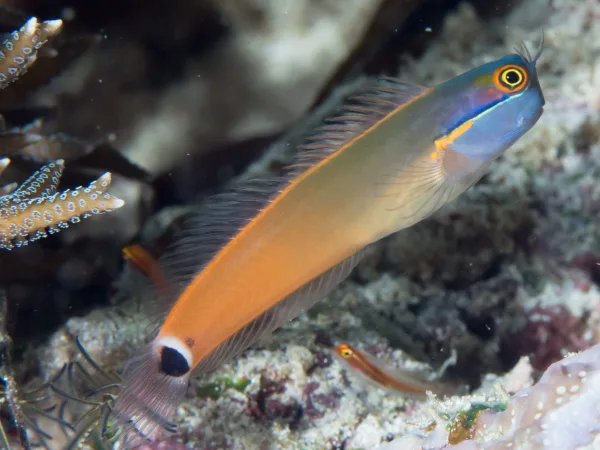
The Tailspot Blenny is small, peaceful and full of personality, perching on rocks and peering out of holes. It grows to about 2.5–3 inches. Our profile suggests 20 gallons, and some care sheets list as little as 10. It grazes the thin film of algae on rocks, so feed algae-based flakes, pellets and nori (dried seaweed), with a little mysis now and then. Caveat: add it to a tank that already has some algae growing on the rocks, and use a lid. It may squabble with other blennies.
Orchid Dottyback
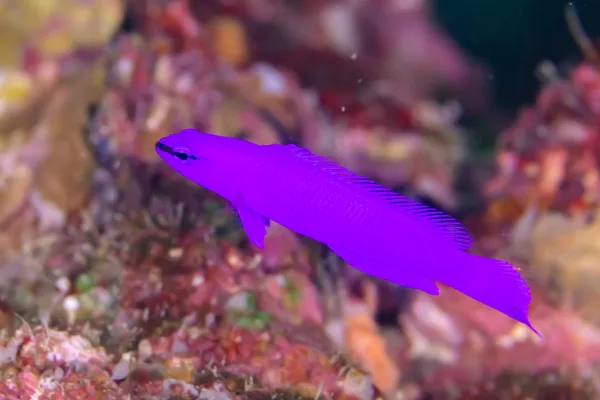
The Orchid Dottyback is a vivid purple fish that is easy to find captive-bred. It grows to about 2.5–3 inches and needs at least 30 gallons with plenty of caves. It eats almost anything, including pellets, flakes and frozen mysis, and it is one of the mildest dottybacks. Caveat: mild for a dottyback still means territorial. Keep only one, add it last, and don’t house it with a Royal Gramma or with small, timid fish such as firefish. It also hunts small shrimp and fanworms.
Six Line Wrasse
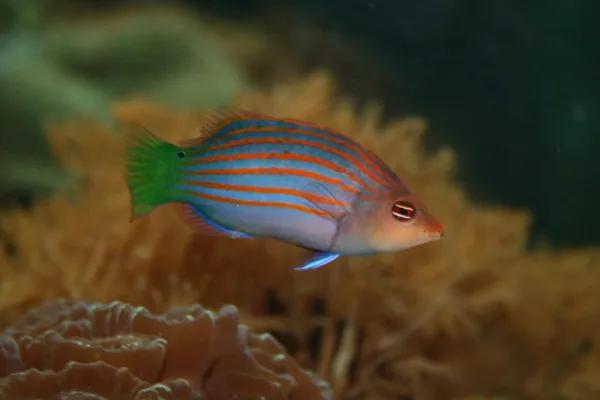
The Six Line Wrasse is a busy, striped little fish that hunts tiny critters through the rockwork all day. It grows to about 3 inches, occasionally 3.5. Our profile suggests 55 gallons, though care sheets range from 30 to 60. It eats mysis, enriched brine shrimp and small pellets, and it leaves corals alone. Caveat: it is semi-aggressive and can bully shy fish, especially ones added after it. Keep one, add it last, and don’t count on it for pest control.
Coral Beauty Angelfish
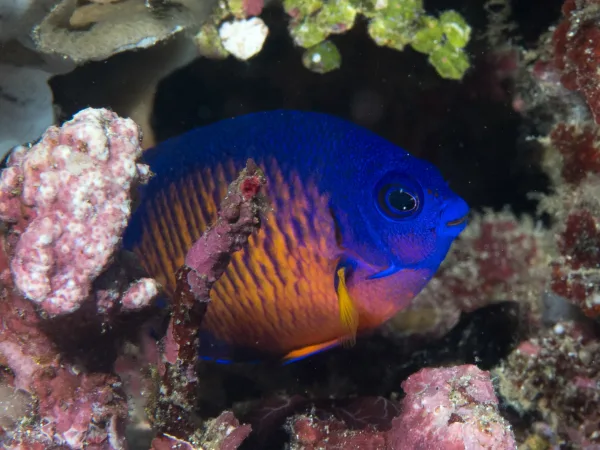
The Coral Beauty Angelfish is often called the hardiest dwarf angelfish, and it makes a good first angel for a bigger tank. It grows to about 4 inches. Our profile suggests 75 gallons (care sheets say 70 or more), in a tank that has been running for a while, with lots of live rock to graze. Feed several small meals a day, mostly algae-based foods plus some mysis. Caveat: it is reef safe with caution and may nip some corals and clams. Keep one, and add it last.
Combinations that work
Most of these fish get along. A few simple rules prevent the usual fights:
- One clownfish pair per tank. Don’t add a second pair or a different kind of clownfish.
- One cave guard. The Royal Gramma and the Orchid Dottyback want the same caves. Pick one.
- One of each goby or blenny. Firefish, watchman gobies and blennies fight with their own kind unless they are a mated pair.
- Keep shy and bossy fish apart in small tanks. Firefish, cardinalfish and the Tailspot Blenny can be pushed around by a Six Line Wrasse or an Orchid Dottyback. In a smaller tank, choose the shy fish and skip the bossy ones.
Some combinations that suit each tank size. Treat them as rough guides, not formulas:
- About 30 gallons: a pair of Ocellaris Clownfish, a Royal Gramma, and either a Firefish Goby or a Yellow Watchman Goby.
- About 55 gallons: a clownfish pair, a Royal Gramma, a Yellow Watchman Goby, a small group of Pajama Cardinalfish and a Tailspot Blenny.
- About 75 gallons: a clownfish pair, a Yellow Watchman Goby, a Banggai pair or a small group of Pajama Cardinalfish, a Tailspot Blenny, a Six Line Wrasse, and a Coral Beauty last. Skip the Orchid Dottyback in this mix: blennies and cardinalfish do poorly with it.
If you plan to keep corals, check each fish in our reef-safe guide before you buy.

Stocking order and numbers
Add fish a few at a time, never all at once. Each new fish adds waste, and the helpful bacteria in your filter need time to catch up. Test the water between additions and wait until the readings are steady before the next fish. Follow our acclimation guide for every new arrival.
A good order to follow:
- Peaceful, shy fish first: cardinalfish, firefish, the watchman goby and the Tailspot Blenny.
- The clownfish pair and the Royal Gramma next. Give the gramma a cave of its own before bossier fish arrive.
- Territorial fish last: the Orchid Dottyback, the Six Line Wrasse and the Coral Beauty. When they arrive last, everyone else already has a home, and they are less likely to claim the whole tank.
How many fish can your tank hold? Old rules such as “one inch of fish per gallon” are rough starting points at best. They ignore how active or territorial a fish is. Count each fish at its adult size, not its store size. Leave room for every fish to claim its own spot, and stock lightly while you learn. A lightly stocked tank is easier to keep stable.

Wait on these
These fish are popular, and some look easy in the store, but they are better as a second or third step:
- Mandarin Dragonet: most wild fish eat only live copepods (tiny crustaceans) and slowly starve in young tanks. Even captive-bred ones need careful feeding.
- Blue Hippo Tang: grows large, needs a very big tank and catches marine ich (a common white-spot parasite) easily.
- Powder Blue Tang: one of the hardest common tangs. It is very prone to ich and often hard to keep at a healthy weight.
- Yellow Tang: hardy, but it needs a large tank with long swimming room, far bigger than most first tanks.
- Maroon Clownfish: easy to feed but very aggressive. Big females can injure tankmates and bite hands.
- Flame Angelfish: rated Moderate, needs a mature tank and may nip corals.
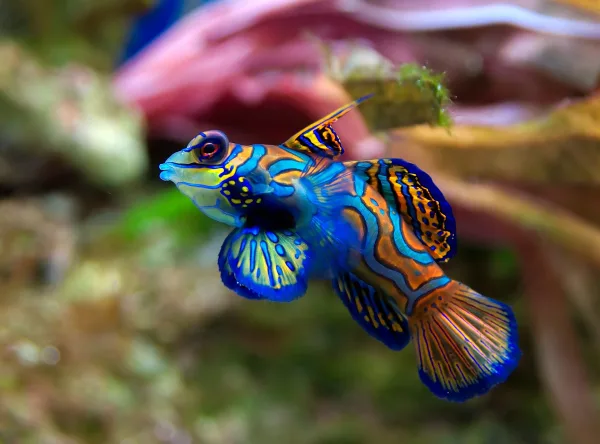 Mandarin DragonetSynchiropus splendidus
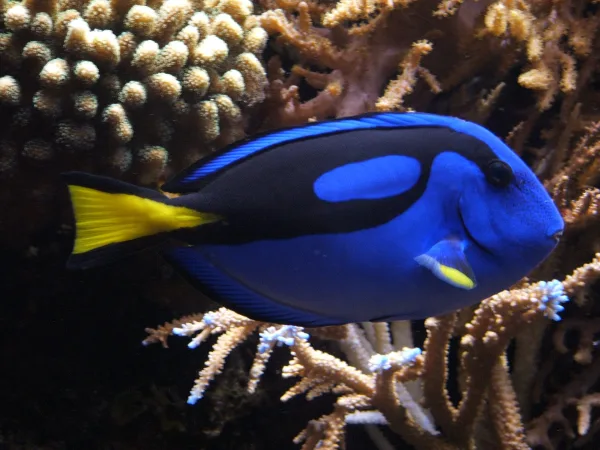 Blue Hippo TangParacanthurus hepatus
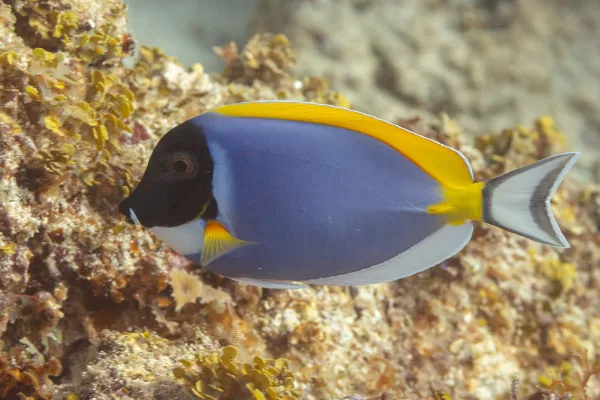 Powder Blue TangAcanthurus leucosternon
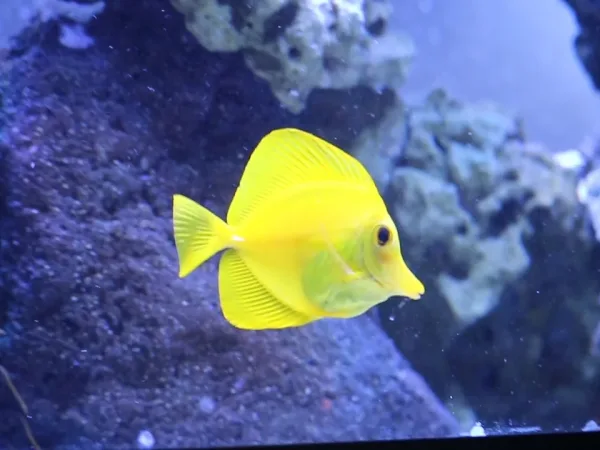 Yellow TangZebrasoma flavescens
 IllustrationMaroon ClownfishAmphiprion biaculeatus
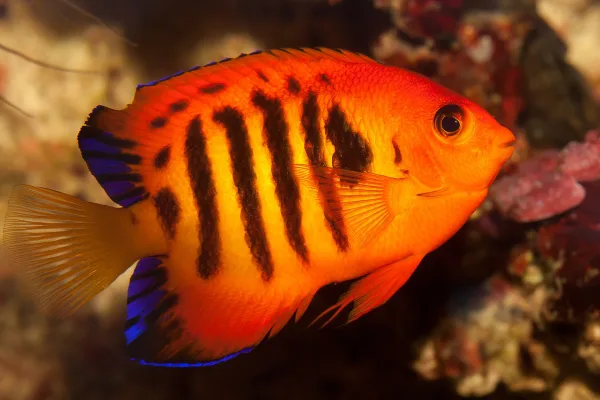 Flame AngelfishCentropyge loriculus

Next steps
Browse every fish in our Species Guide and read the full profile before you buy. When your fish arrive, take your time with acclimation. For anything about delivery, see our shipping & live arrival page.

Sources
- Proaquatix Captive-Bred Ocellaris Clownfish, LiveAquaria liveaquaria.com
- Royal Gramma Basslet, Quality Marine qualitymarine.com
- Firefish Goby, LiveAquaria liveaquaria.com
- ORA Watchman Goby, Bulk Reef Supply bulkreefsupply.com
- Pajama Cardinalfish, Quality Marine qualitymarine.com
- Kaudern’s Banggai Cardinalfish, Quality Marine qualitymarine.com
- Tail Spot Blenny, LiveAquaria liveaquaria.com
- Orchid Dottyback: Hardy, Peaceful and Just Right for Reef Tanks, Reef Builders reefbuilders.com
- Six Line Wrasse, LiveAquaria liveaquaria.com
- Coral Beauty Angelfish, Quality Marine qualitymarine.com
- Is the “One Inch of Fish per One Gallon of Water” Rule the Gold Standard?, LiveAquaria liveaquaria.com
- How Many Fish in an Aquarium, Saltwater Aquarium Blog saltwateraquariumblog.com
This is general hobby guidance, not veterinary advice. Last updated October 25, 2026.