 Hot
Aquacultured
Fish · Clownfish
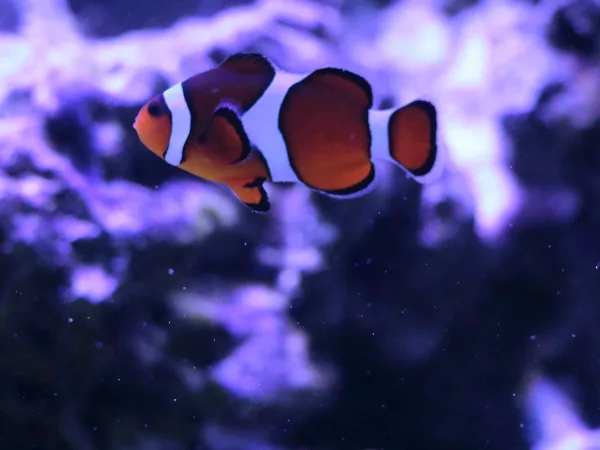
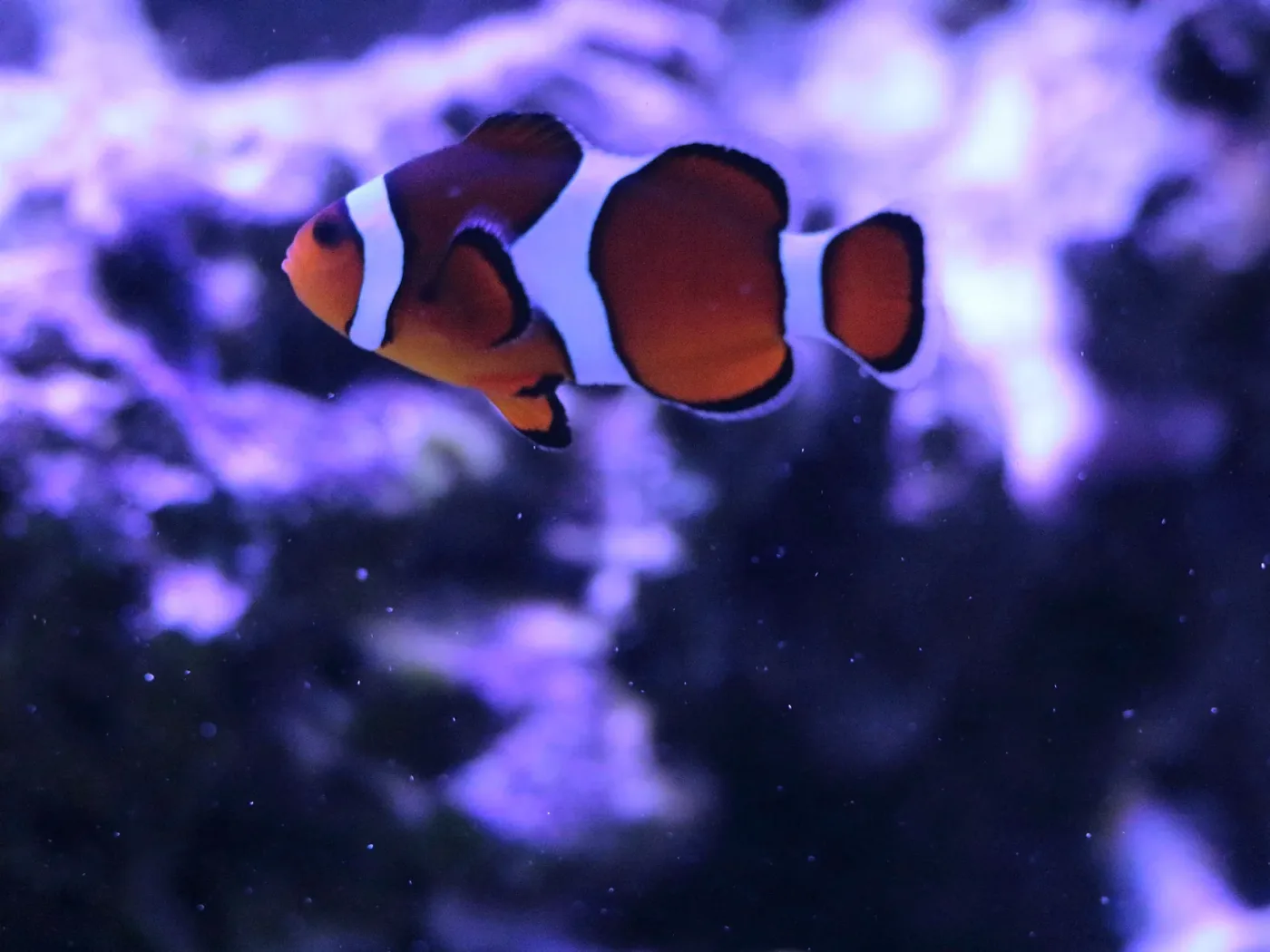
Ocellaris Clownfish
Amphiprion ocellaris
Also called False Percula Clownfish, Clown Anemonefish, Common Clownfish, Black & White Ocellaris (Darwin Black Ocellaris), Snowflake Clownfish, Black Ice Snowflake Clownfish
- CareEasy
- Reef safeYes
- TemperamentPeacefulPeaceful, but fights other clownfish and guards host
- Favorite foods
- Marine pellets
- Frozen mysis shrimp
- Herbivore / algae foods
- Max size4 in (10.2 cm)
- Min tank20 gal
- LifespanTypically 10+ years with good care
- IUCN statusLeast Concern
Quick answers
- How big does the Ocellaris Clownfish get?
- Up to 4 in (10.2 cm).
- What size tank does it need?
- At least 20 gallons.
- How hard is it to keep?
- Care level: Easy.
- Is it reef safe?
- Yes. Does not eat corals or invertebrates.
- What does it eat?
- Marine pellets
- Frozen mysis shrimp
- Herbivore / algae foods
- How long does it live?
- Typically 10+ years with good care; FishBase records 12 years in captivity.
- What are good tankmates?
- Gobies and blennies
- Cardinalfish
- Firefish and dartfish
- Royal Gramma
- Peaceful wrasses
The 30-second version
The ocellaris clownfish is a small orange fish with three white stripes. Each stripe has a thin black edge. In the wild it lives in a big sea anemone. An anemone is a soft animal with arms that sting. The arms sting most fish, but the clownfish has a slimy coat that keeps it safe. The anemone keeps the clownfish safe from fish that want to eat it. In return, the clownfish chases off fish that try to bite the anemone. Every clownfish starts life as a boy. The biggest fish in the group turns into a girl, and she is the boss. The eggs are laid on a rock. The dad guards them and fans them with his fins. Most clownfish sold today were raised by people, which helps wild reefs. Marlin and Nemo from Finding Nemo are this kind of fish!
Water & care
Captive-bred ocellaris are among the hardiest marine fish and a classic first fish: they eat pellets and frozen foods readily and tolerate a range of conditions. Buy captive-bred to avoid the disease problems (especially Brooklynella) that are common in wild-caught clownfish. Keep one fish or one pair per tank; two juveniles added together will usually sort themselves into a female and a male. An anemone is not required: captive-bred clownfish do fine without one, and many adopt a coral, a rock or a corner of the tank as their home instead.
| Parameter | Keep it at | Where that sits on the usual reef range |
|---|---|---|
| Temperature | 72–78 °F | |
| Salinity (SG) | 1.020–1.025 | |
| pH | 8.1–8.4 | |
| Alkalinity | 8–12 dKH |
Ranges from LiveAquaria's care sheet. The fish has no specific calcium, magnesium, nitrate or phosphate target; follow your corals' needs in a reef tank, and natural-seawater salinity (about 1.025-1.026) is fine. Keep ammonia and nitrite at zero and nitrate low with regular water changes. Captive ocellaris have been reared in brackish water down to 15 ppt without known harm, but stable normal salinity is best.
Feeding
DietOmnivore
Favorite foods
- Frozen mysis shrimp
- Quality marine pellets
- Enriched frozen brine shrimp
- Frozen copepods or cyclops
- Nori and algae-based flakes
Feed small amounts 2-3 times a day, only what is eaten within a minute or two. Captive-bred fish are eager eaters and take pellets and flakes as well as frozen foods. Mix meaty foods with some algae-based food, and do not rely on unenriched brine shrimp alone.
Tank & maintenance
- Minimum tank
- 20 gallons
- Aquascape
- Live rock with caves and a sheltered spot the pair can claim. An anemone is optional; if you add one, use a mature tank and a hardy species such as a Bubble Tip Anemone (the wild host species are difficult to keep), and cover pump intakes.
- Lighting
- No special needs for the fish. Lighting only matters if you keep a host anemone or corals, which need proper reef lighting.
- Water flow
- Low to moderate; clownfish are not strong swimmers and stay near their home.
Routine upkeep
Standard reef or fish-only upkeep: test salinity, temperature, ammonia, nitrite and nitrate regularly and do routine partial water changes. Quarantine every new fish for 2-4 weeks first, because clownfish easily catch Brooklynella, ich and velvet from new arrivals. Keep fingers away from a spawning pair's nest: females bite.
Temperament & tankmates
TemperamentPeaceful
The mildest of the commonly kept clownfishes and fine with most community fish, but still territorial: the female defends her chosen spot, host or eggs and will nip tankmates, or the aquarist's hand, that come too close. Ocellaris fight with other clownfish species and with extra ocellaris, so keep a single pair added at the same time. Retailers rate it anywhere from Peaceful to Semi-aggressive depending on the listing.
Reef safeYes
Does not eat corals or invertebrates. A clownfish that adopts a coral (for example a torch, hammer or frogspawn) as a substitute host may rub and push on it so much that the coral stays closed; move the coral or offer a better host if that happens.
Good tankmates
- Gobies and blennies
- Cardinalfish
- Firefish and dartfish
- Royal Gramma
- Peaceful wrasses
- Tangs in suitably large tanks
- Bubble Tip Anemone (Entacmaea quadricolor) as a captive host
Avoid
- Other clownfish species
- More than one pair of ocellaris in a typical home tank
- Large predators such as lionfish, groupers and eels
- Aggressive damselfish and dottybacks in small tanks
Help it thrive
- Buy captive-bred fish: they are hardier, already eat prepared foods and carry far fewer parasites than wild-caught clownfish.
- Add your clownfish as a pair, or as two small juveniles at the same time; the bigger one becomes the female.
- Skip the anemone unless your tank is mature and you want to care for one; an anemone is a separate and more demanding animal.
- Feed a varied diet of meaty frozen foods plus pellets that contain algae.
- Give the pair a cave or corner in calm water that they can claim; a settled clownfish is a bold, visible clownfish.
Common ailments
Brooklynella ("clownfish disease", Brooklynella hostilis)
- Signs
- Thick, whitish mucus that often starts on the head, pale or peeling patches of skin, fast breathing, clamped fins, lethargy and refusing food. It moves very fast: once the later signs show, a fish can die within hours to a day or two.
- Prevention
- Buy captive-bred clownfish (wild-caught clowns are hit hardest) and quarantine every new fish before it goes into the display.
- Treatment
- Move the fish to a hospital tank right away. Formalin baths (dose strictly by the product label, with strong aeration) are the most commonly recommended treatment; chloroquine phosphate is an alternative. Lowering the hospital tank's salinity to about 1.018 helps the fish cope with skin damage. Never dose formalin in a reef: it is toxic to invertebrates.
Marine ich (Cryptocaryon irritans)
- Signs
- White, salt-grain spots on the body and fins, scratching or flashing against rocks, faster breathing, and loss of appetite in heavy infections.
- Prevention
- Quarantine all new fish, avoid temperature swings, and keep stress low (secure hiding places, compatible tankmates).
- Treatment
- Treat every fish in a hospital tank with copper or chloroquine phosphate, or use the tank-transfer method. The parasite lives on in the display, so leave it without fish for the full fallow period (commonly about 10-11 weeks).
Marine velvet (Amyloodinium ocellatum)
- Signs
- A fine gold-grey dusting on the skin, very rapid breathing, gasping near the surface or at the outflow, and sudden deaths, often within a few days.
- Prevention
- Quarantine and observe new fish (including captive-bred ones from mixed systems) for several weeks.
- Treatment
- Act immediately: hospital tank with copper or chloroquine phosphate; the display needs a fishless fallow period as for ich.
This is general hobby guidance, not veterinary advice. Quarantine new arrivals and treat in a separate tank whenever you can.
Risks of owning one
- Females guarding eggs or a host will bite hands during tank maintenance.
- A clownfish that hosts in a coral can stress it with constant rubbing.
- Buying an anemone for the clownfish adds a demanding animal that can wander into pumps, sting corals and foul the tank if it dies.
- Mixing clownfish species, or adding a third clownfish to a pair, usually ends in fighting.
- Wild-caught clownfish frequently carry Brooklynella, which can spread to other fish.
- Long-lived: plan for a commitment of 10 years or more.
Breeding
DifficultyEasy Captive-bredWidely available
Egg-layers with male parental care. A bonded pair lays up to about a thousand eggs on a flat rock or tile near its home; the male fans and guards them. Eggs hatch after about 6-11 days depending on temperature, usually after dark. Larvae are fed enriched rotifers first, then newly hatched Artemia about a week later, and settle out roughly 10-20 days after hatching.
- Start with two small captive-bred juveniles or a proven pair; the larger fish becomes the female.
- Feed the pair generously with varied frozen foods so they come into breeding condition.
- Provide a flat surface (rock or tile) near their chosen spot; the eggs are laid there and darken, showing silvery eyes, as hatching nears.
- Hatching happens after lights-out on about night 6-11; move the eggs before that night or catch the larvae with a light into a separate rearing tank.
- Feed enriched rotifers (with phytoplankton in the tank) for the first week, then add newly hatched brine shrimp.
- Larvae settle and gain their stripes around 10-20 days after hatching; then wean them onto fine prepared foods.
Deep dive The science, history and family tree
The science
Amphiprion ocellaris is a small anemonefish in the damselfish family (Pomacentridae) that reaches about 11 cm total length, although aquarium adults are usually around 7-8 cm. The body is oval and laterally compressed, orange to reddish-brown, with three white bars (behind the eye, at mid-body and at the base of the tail) edged with thin black margins. It typically has 11 dorsal-fin spines and a relatively tall spiny dorsal fin, which help separate it from the near-identical orange clownfish, A. percula (usually 10 spines and thicker black margins). Melanistic populations that are black with white bars occur in Australia's Northern Territory.
The species ranges from the eastern Indian Ocean (Andaman and Nicobar Islands) and northwest Australia to Singapore, Indonesia and the Philippines, north to Taiwan and the Ryukyu Islands. It lives on outer reef slopes and in calm, sheltered lagoons at 1-15 m in obligate association with three large host anemones: Heteractis magnifica, Stichodactyla gigantea and S. mertensii. A mucus coat keeps the host's stinging cells from firing, and the fish in turn drives off anemone-eating fishes.
Groups consist of a breeding pair and smaller non-breeders in a size-based hierarchy. The species is a protandrous hermaphrodite: fish mature as males, and when the female dies the dominant male changes sex. Eggs are laid on hard substrate beside the host and are guarded, fanned and cleaned by the male until they hatch after about 6-8 days, usually at night. The diet is omnivorous, mainly zooplankton such as copepods and larval tunicates plus algae. The IUCN lists the species as Least Concern (assessed 2021).
- Appearance
- Bright orange body with three white bars (head, mid-body, tail base) thinly edged in black; fins orange with thin black edges. Look-alike: the Percula Clownfish (A. percula) has thicker black margins, usually 10 instead of 11 dorsal spines and a lower spiny dorsal fin, and the two can be hard to tell apart from a photo. Morphs: the Black & White (Darwin Black) ocellaris comes from a naturally black population in northern Australia and is black with white bars; the Snowflake has irregular, merging white bars and is a captive line that first appeared at Tropical Marine Centre (UK) around 1999; the Black Ice Snowflake is ORA's cross of Black Ocellaris x Snowflake, with an orange body, snowflake-style white patches and heavy black edging. Other captive morphs include misbars (broken or missing bars), Mocha and Midnight.
- Native range
- Eastern Indian Ocean and western Pacific: Andaman and Nicobar Islands and northwest Australia (including the Northern Territory, home of the black form) to Singapore, Indonesia and the Philippines, north to Taiwan and the Ryukyu Islands (Japan).
- Habitat
- Reef-associated at 1-15 m (usually 3-15 m) on outer reef slopes and in calm, sheltered lagoons. Lives only with host anemones: the magnificent anemone (Heteractis magnifica), giant carpet anemone (Stichodactyla gigantea) and Mertens' carpet anemone (S. mertensii), as a breeding pair plus a few smaller non-breeders.
- Size
- 4 in (10.2 cm). FishBase maximum 11 cm TL. Females are the largest fish in a group; aquarium adults are usually about 3 in (LiveAquaria lists 3 in), and males stay noticeably smaller than their mates.
- Lifespan
- Typically 10+ years with good care; FishBase records 12 years in captivity. Clownfish are long-lived for their size: the sister species A. percula has been estimated to live about 30 years in the wild.
- Conservation
- Least Concern. IUCN Least Concern (assessed 2021). Not listed by CITES. It was among the most heavily traded marine aquarium fishes in 1997-2002, but it breeds readily in captivity and captive-bred fish are easy to find; they are the responsible choice. A 2017 study found no immediate jump in wild-caught sales after Finding Nemo (2003), despite the popular "Nemo effect" story
In the aquarium vs in the wild
In your aquarium
The classic beginner fish and centerpiece of the reef hobby, one of the most widely produced captive-bred marine fish, with many designer morphs. It is also used as a laboratory species because it breeds so easily.
On the reef
A small omnivore that feeds on zooplankton and algae while living in partnership with large sea anemones: the anemone shelters it from predators, and the fish defends its host from anemone-eating fishes.
History
Georges Cuvier described the species in 1830. Clownfish were among the first marine fish bred for the aquarium trade: Martin and Barbara Moe started Aqualife Research in Florida in the early 1970s (founded 1973), the first company to produce hatchery-raised marine tropical fish, beginning with clownfish. Ocellaris became one of the most traded marine fish of the late 1990s and early 2000s, and Pixar's Finding Nemo (2003) made Marlin and Nemo household names. Selective breeding has since produced many designer lines. The Snowflake appeared from normal-looking pairs at Tropical Marine Centre in the UK around 1999, when the extra white was considered a flaw; ORA obtained its first Snowflake pair in 2005, crossed Snowflakes with Black Ocellaris to create the Black Ice Snowflake, and produced the first Black Snowflake in 2011. Black & White ocellaris trace back to the naturally black population of northern Australia.
Evolution & relatives
Clownfishes (genus Amphiprion, about 30 species) are one branch of the damselfish family Pomacentridae. Damselfishes belong to Ovalentaria, a large group of spiny-rayed fishes that lay sticky eggs on the bottom, which also includes dottybacks, blennies, cichlids and silversides. That means a clownfish is more closely related to a dottyback or blenny than to a goby or cardinalfish. Molecular dating puts the root of the clownfish lineage at roughly 19 million years ago (Litsios et al. 2012), with most living species arising in later bursts of speciation. Litsios and colleagues showed that the partnership with anemones acted as a key innovation that sped up clownfish diversification, as different species specialized on different hosts and habitats. A. ocellaris and A. percula are sister species, and DNA studies place the Maroon Clownfish (formerly Premnas) closest to this pair.
Family tree, from kingdom down
- Kingdom Animalia Animals Animals are living things made of many cells that must eat food to live. Fish, corals, crabs, snails and sea stars are all animals.
- Phylum Chordata Chordates Chordates have a stiff rod running down their back at some point in their lives. In fish and people, this rod is replaced by a backbone.
- Subphylum Vertebrata Vertebrates Vertebrates are animals with a backbone and a skull. Fish, frogs, birds and people are all vertebrates.
- Infraphylum Gnathostomata jawed vertebrates
- Parvphylum Osteichthyes bony fishes
- Gigaclass Actinopterygii ray-finned fishes
- Superclass Actinopteri
- Class Teleostei Teleost fishes Teleosts are bony fishes with thin, bendy fin rays and jaws that can push forward. Almost all of the fish in the world are teleosts.
- Order Ovalentaria (unplaced) Unplaced ovalentarian fishes Ovalentaria is a big group of fish with spiny fins. Scientists found it by studying DNA, and most of its fish lay eggs that stay stuck to the bottom. 'Incertae sedis' means 'place not sure': scientists have not settled which order damselfishes, dottybacks and basslets belong in.
- Family Pomacentridae Damselfishes and clownfishes Damselfishes are small, often colorful reef fish that guard their homes. Clownfish and chromis are damselfishes.
- Genus Amphiprion Clownfishes Clownfish live among the stinging tentacles of sea anemones without getting hurt. They all start life as males, and the biggest can turn into a female.
- Species Amphiprion ocellaris
See it on the Tree of Life Compare with another species
Closest relatives
- Amphiprion percula Percula Clownfish (Orange Clownfish) Sister species; near-identical look-alike
- Amphiprion biaculeatus Maroon Clownfish Same genus; closest relative of the ocellaris/percula pair (formerly Premnas) Read guide · Compare
- Amphiprion clarkii Clark's Clownfish Same genus; a generalist that lives with many anemone species
- Amphiprion frenatus Tomato Clownfish Same genus; another popular hobby clownfish
- Chromis viridis Green Chromis Same family (Pomacentridae); a damselfish without an anemone partnership Read guide · Compare
Fun facts
- Every ocellaris starts life as a male. The largest fish in a group becomes the female, and if she dies her mate changes sex to replace her.
- Clownfish talk to each other with clicks, pops and chirps made with their jaws and teeth.
- Their eggs usually hatch at night, about a week after they are laid.
- Marlin and Nemo in Finding Nemo are ocellaris clownfish, not percula clownfish.
- A slimy mucus coat keeps the anemone's stinging cells from firing on the clownfish.
Learn more
- FishBase: Amphiprion ocellaris (Clown anemonefish) fishbase.se
- Wikipedia: Ocellaris clownfish en.wikipedia.org
- LiveAquaria: Proaquatix Captive-Bred Ocellaris Clownfish liveaquaria.com
- ORA: Black Ice Snowflake Clownfish orafarm.com
Sources
- WoRMS: Amphiprion ocellaris marinespecies.org
- FishBase: Amphiprion ocellaris (Clown anemonefish) fishbase.se
- Wikipedia: Ocellaris clownfish en.wikipedia.org
- Wikipedia: Clownfish en.wikipedia.org
- LiveAquaria: Proaquatix Captive-Bred Ocellaris Clownfish liveaquaria.com
- LiveAquaria: Captive-Bred Black Ice Clownfish liveaquaria.com
- ORA: Snowflake Clownfish (line history) orafarm.com
- ORA: Black Ice Snowflake Clownfish orafarm.com
- Litsios et al. 2012, Mutualism with sea anemones triggered the adaptive radiation of clownfishes (BMC Evol Biol) pmc.ncbi.nlm.nih.gov
- Reef Builders: Brooklynellosis, clownfish disease (Jeff Kurtz, 2015) reefbuilders.com
- Pet Life Radio / Aquariumania: Martin Moe and the history of marine fish aquaculture petliferadio.com
- UF/IFAS EDIS FA224: Overview of Commonly Cultured Marine Ornamental Fish ask.ifas.ufl.edu
- Wikipedia: Ovalentaria en.wikipedia.org
- Militz & Foale 2017, The "Nemo Effect": perception and reality of Finding Nemo's impact on marine aquarium fisheries (Fish and Fisheries) researchonline.jcu.edu.au
Care facts
The care facts on this guide and its product pages (care level, reef safety, temperament, size, tank, diet, flow, purpose, foods, acclimation and origin) combine 15 independent sources, checked October 25, 2026.
- Amphiprion ocellaris, Clown anemonefish (FishBase) FishBase
- Proaquatix Captive-Bred Ocellaris Clownfish LiveAquaria
- ORA Fancy Ocellaris Clownfish (Bulk Reef Supply) Bulk Reef Supply
- Clown Ocellaris Aquacultured (Amphiprion ocellaris) Aquatics Unlimited
- Amphiprion ocellaris Tropical Fish Hobbyist Magazine
- Ocellaris Clownfish Quality Marine
- Species Spotlight: Ocellaris Clownfish Frags2Fishes
- Black Ocellaris Clownfish - Amphiprion ocellaris - Captive Bred That Pet Place
- Ocellaris Clownfish Care Guide Inkbird (equipment maker blog)
- Ocellaris Clownfish Care Guide for Reef Tanks Fancy Reef
- Ocellaris Clownfish Care Guide Easy Clean Aquatics
- Ocellaris Clownfish Care Guide Furry Critter Network
- 9 Easy Steps to Drip Acclimating New Saltwater Fish Bulk Reef Supply
- How to Drip Acclimation Quality Marine
- Acclimating Fish Using Drip Method Saltwater Aquarium Blog
Scientific names and classification follow the World Register of Marine Species (AphiaID 278400). Last updated October 25, 2026.
Shop this species
Search the shop →
Hot
Aquacultured