How to Start a Saltwater Aquarium
Everything a first-time reefer needs to plan, set up and cycle a saltwater tank, with a realistic timeline from empty glass to first fish.
Updated October 25, 2026 · 7 min read
A saltwater tank is not much harder than a freshwater one, but it is less forgiving of shortcuts. The good news: almost every early failure comes from the same two mistakes, rushing and unstable water. Go slowly, test often, and a first tank can thrive for years.

Pick the tank size
Bigger tanks are easier, not harder. More water dilutes waste and leftover food, and temperature and chemistry change more slowly, so you have time to notice and fix a problem. In a small tank, one heavy feeding or a dosing mistake can foul the water quickly.
Advice on the minimum varies, but most beginner guides land somewhere around 30 to 40 gallons (about 115–150 liters) or more. A 40-gallon “breeder” tank is a popular first choice because it is deep from front to back, which leaves room for rockwork. Small “nano” tanks can work, but they leave much less room for error.
Shape matters too. A tank that is wide front to back gives you more space for rock, fish and corals than a tall, narrow one of the same volume.

Choose a good spot
A filled saltwater tank, with rock and sand inside, is far heavier than most people expect. Put it on a stand built for aquariums, on a solid, level floor. For a large tank, or any tank on an upper floor, check that the floor can carry the weight before you fill it.
Keep the tank out of direct sunlight and away from heating and cooling vents, which cause temperature swings and algae. Leave room behind and beside it for equipment and a power strip, and keep a bucket and towels within reach.

Gather the equipment
Here is what each piece does:
- Tank and stand: the stand must support the full weight evenly.
- Heater: keeps the water at a steady temperature. Use a separate thermometer to check it.
- Pumps: a return pump moves water through the filter, and a circulation pump (a “powerhead”) keeps water moving across the rock so there are no dead spots.
- Protein skimmer: removes dissolved waste before it breaks down. Many keepers run one; on a small, lightly stocked tank some skip it and rely on more frequent water changes instead.
- Lighting: a fish-only tank just needs a light to see by. Corals use light for food, so a reef needs a light made for corals.
- Rock: live rock comes with helpful bacteria and tiny animals, but can also carry pests. Dry rock is clean and pest-free, but starts with no bacteria, so the tank takes longer to get going.
- Sand: gives burrowing animals a home and makes the tank look natural.
- RO/DI water: water run through a reverse osmosis and deionization (RO/DI) filter, which strips out minerals and chemicals found in tap water. Use it for everything.
- Reef salt mix: a powder you dissolve in RO/DI water to make saltwater.
- Refractometer: a small tool that measures salinity, more accurate than a floating hydrometer.
- Test kits: at minimum ammonia, nitrite, nitrate, pH and alkalinity, plus calcium and magnesium for a reef.
- Auto top-off (ATO): optional but very helpful. A sensor tops the tank up with fresh water as it evaporates.
Sump or all-in-one? A sump is a second tank, usually under the display, that holds the heater, skimmer and other gear out of sight. An all-in-one tank hides the same equipment in a chamber built into the back. Both work; all-in-ones are simpler to set up.


Know your water targets
Salinity is measured as specific gravity (a measure of how salty the water is, compared with fresh water). Here are good beginner targets for a reef tank:
- Temperature: 76–78°F (24–26°C), and keep it steady.
- Specific gravity: 1.023–1.026. Natural seawater is about 1.025–1.026, and many reef keepers aim for that end of the range.
- pH: 8.1–8.4.
- Alkalinity: 8–12 dKH (a measure of the water’s buffering power, which corals use to build skeletons).
- Calcium: 380–450 ppm (parts per million).
- Magnesium: 1,250–1,350 ppm.
- Ammonia and nitrite: zero.
- Nitrate: low. Advice varies, but under 10 ppm is a common reef target; some charts aim for under 1 ppm. A fish-only tank can run higher, up to about 30 ppm.
- Phosphate: low. Published targets range from under 0.03 to under 0.2 ppm.
Stability matters more than hitting one exact number. A tank that holds steady slightly off target does better than one that swings back and forth.

Mix saltwater and top off
Always mix saltwater in a separate clean bucket or tub, never in the tank with animals in it. Fill it with RO/DI water, add a heater and a small pump, then stir in salt mix following the bag’s directions. Let it mix until it is fully clear, then check the salinity with your refractometer. Add salt to raise it or RO/DI water to lower it.
Water evaporates from your tank every day, but salt doesn’t evaporate. Only fresh water leaves, so the water left behind gets saltier. Replace what evaporates with plain RO/DI water, never saltwater, or the salinity will keep climbing. Check salinity before you top off. An auto top-off makes this hands-free.

Cycle the tank
Fish waste and leftover food make ammonia, which is toxic. In a healthy tank, bacteria turn ammonia into nitrite (also toxic), and other bacteria turn nitrite into nitrate, which is far less harmful and is removed with water changes. This is the nitrogen cycle. A new tank has none of these bacteria yet, and “cycling” means growing them before any animals go in.

The simplest beginner method is a fishless cycle:
- Set up the tank with rock, sand, saltwater, heater and pumps running.
- Add a bottled nitrifying bacteria product to give the cycle a head start, following the product’s directions.
- Add an ammonia source, such as an ammonium chloride product made for fishless cycling, at the dose on its label. A pinch of fish food left to rot also works, but it is harder to control.
- Test ammonia and nitrite almost every day. You will see ammonia rise and fall, then nitrite rise and fall, then nitrate appear. Top up the ammonia when it runs low.
- The cycle is done when ammonia and nitrite both read zero and nitrate is showing.
Without bottled bacteria, this often takes 3–6 weeks; bacteria products can shorten it. When it is finished, do a water change to bring the nitrate down before adding animals.


Follow a realistic timeline

- Setup week: fill, mix saltwater, place rock and sand, and run everything for a few days to check for leaks and a steady temperature.
- Cycling weeks: dose ammonia and test until the cycle finishes.
- After the cycle: do a water change and add a small clean-up crew once algae starts to grow, such as Turbo Snails for algae on rocks and glass, Nassarius Snails to scavenge leftover food in the sand, and a few Blue Leg Hermit Crabs. Keep spare empty shells for the hermits so they don’t go after your snails. Clean-Up Crew for a 20, 40 or 75 Gallon Reef Tank has starting numbers for each tank size.
- First fish: start with one or two hardy, peaceful fish, such as a pair of captive-bred Ocellaris Clownfish. Then wait, test, and add the next one or two only when ammonia and nitrite stay at zero.
- First corals: once the tank has been stable for a while and your fish are settled, add a few hardy corals.
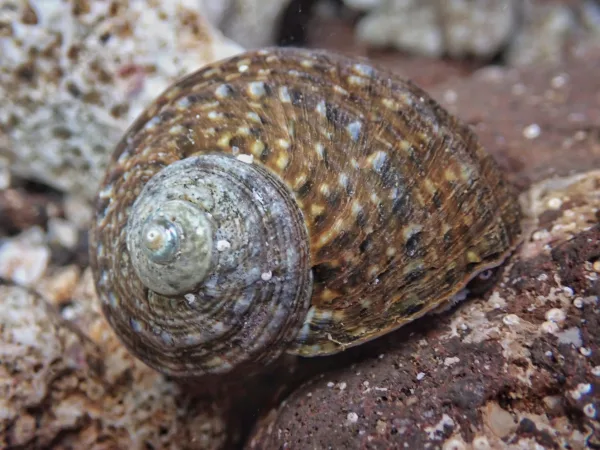 Turbo SnailTurbo fluctuosus
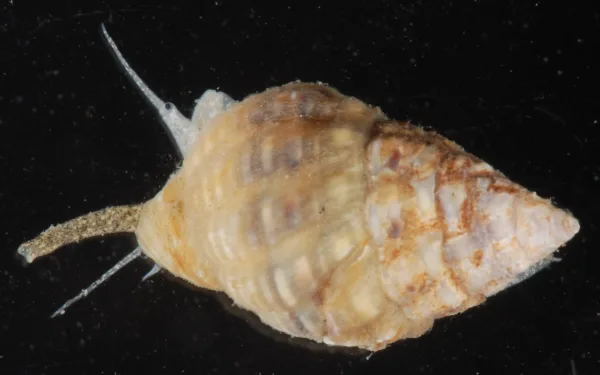 Nassarius SnailPhrontis vibex
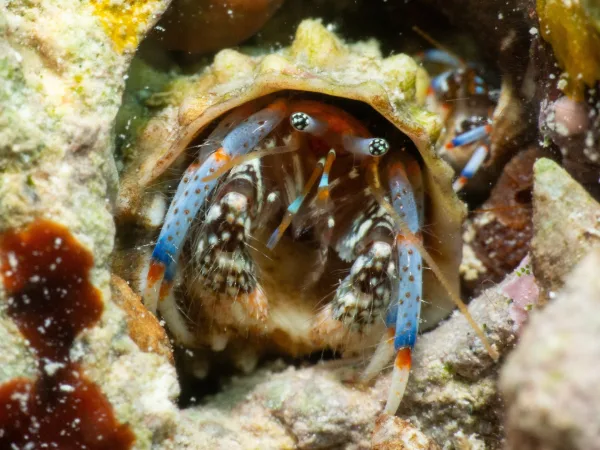 Blue Leg Hermit CrabClibanarius tricolor
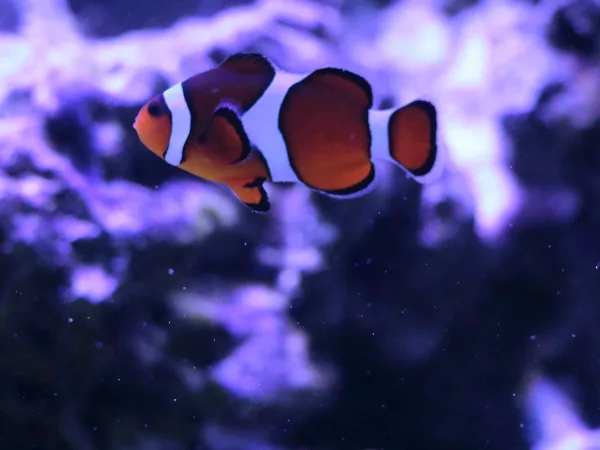 Ocellaris ClownfishAmphiprion ocellaris
Expect an “ugly phase” in the first months. A brown dusty film of diatoms (tiny algae that feed on silicate from new rock, sand and water) usually comes first and tends to fade on its own, often within a few weeks. Other nuisance algae, such as green film or hair algae, may show up too. This is normal in a new tank. Don’t panic, don’t overdose chemicals, and don’t rush in more animals. Keep up water changes, feed lightly and let the clean-up crew work.


Adding fish slowly is the most important rule. Every new fish adds waste, and the bacteria need time to catch up. Adding many fish at once is one of the most common ways new tanks crash.
Keep up with maintenance
- Water changes: replace about 10–20% of the water every week or two with fresh saltwater matched to the tank’s temperature and salinity. Siphon out debris from the sand at the same time.
- Testing: test on a regular schedule, ideally the same day as your water change. Salinity, alkalinity, nitrate and phosphate are the ones to watch most closely, plus calcium and magnesium once you have corals.
- Daily checks: look at the temperature, top off evaporation, and count your fish at feeding time.

Quarantine new fish
Quarantine means keeping new fish in a separate, simple tank for a while before they join your display. It gives you time to spot illness without risking every fish you own. A common plan is to watch new fish closely for about 3–4 weeks. If a fish does get sick, ask your vet or a fish-health specialist and follow the product’s directions for any treatment.

What to buy first
Before you shop, read Best Saltwater Fish for Beginners to plan your first fish, and Reef-Safe Fish and Invertebrates if you plan to keep corals. When your animals arrive, follow How to Acclimate Saltwater Fish, Corals and Invertebrates to move them into the tank safely. You can browse every animal we profile in the Species Guide.
Sources
- Proper Water Parameters for Home Aquariums, LiveAquaria liveaquaria.com
- Saltwater Aquarium & Reef Tank Water Parameters: Acceptable Ranges Reference Chart, Bulk Reef Supply bulkreefsupply.com
- Beginner’s Guide to Cycling a Saltwater Aquarium, Reef Builders reefbuilders.com
- How to Cycle Your Saltwater Tank, Reef Builders reefbuilders.com
- The Nitrogen Cycle in Your Aquarium, Bulk Reef Supply bulkreefsupply.com
- 4 Reasons to Start with a Bigger Saltwater Tank, Reef Builders reefbuilders.com
- 5 Minute Saltwater Aquarium Guide Ep. 3: Tank Size, Bulk Reef Supply bulkreefsupply.com
- Aquarium Maintenance: Water Changes, Reef Builders reefbuilders.com
- Saltwater Aquarium Beginner’s Guide Episode 8: Maintenance, Bulk Reef Supply bulkreefsupply.com
- How to Quarantine Saltwater Fish Successfully, Bulk Reef Supply bulkreefsupply.com
- Revisited: Quarantine Procedures for Fish and Invertebrates, Quality Marine qualitymarine.com
- How to Manage the Ugly Stage of a New Reef Tank, Reef Builders reefbuilders.com
This is general hobby guidance, not veterinary advice. Last updated October 25, 2026.