 Sold out
Aquacultured
Fish · Clownfish
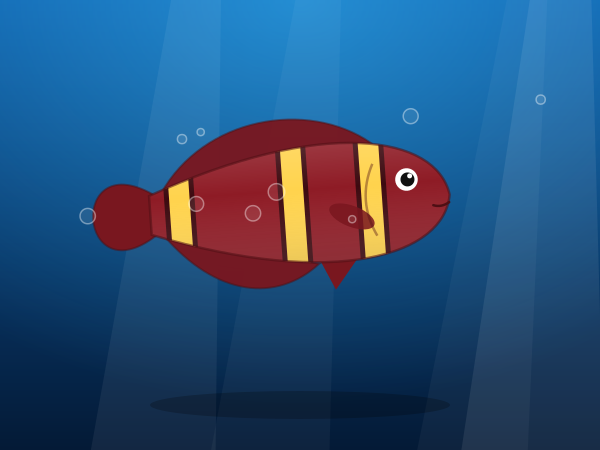
Maroon Clownfish
Amphiprion biaculeatus
Also called Gold Stripe Maroon Clownfish, White Stripe Maroon Clownfish, Spinecheek Anemonefish, Maroon Anemonefish
- CareEasy
- Reef safeYes
- TemperamentAggressiveAggressive to other clownfish and similar-sized fish
- Favorite foods
- Frozen mysis shrimp
- Meaty frozen foods
- Algae / herbivore foods
- Max size6 in (15.2 cm)
- Min tank40 gal
- LifespanVery long-lived for a small fish
- IUCN statusLeast Concern
Quick answers
- How big does the Maroon Clownfish get?
- Up to 6 in (15.2 cm).
- What size tank does it need?
- At least 40 gallons.
- How hard is it to keep?
- Care level: Easy.
- Is it reef safe?
- Yes. Does not eat corals or invertebrates.
- What does it eat?
- Frozen mysis shrimp
- Meaty frozen foods
- Algae / herbivore foods
- How long does it live?
- Very long-lived for a small fish: decades are possible.
- What are good tankmates?
- Bubble Tip Anemone (its natural host)
- Tangs and foxface rabbitfish in larger tanks
- Larger, active wrasses
- Hawkfish
- Other robust, similar-sized community fish
The 30-second version
The maroon clownfish is the biggest clownfish of all. It has a deep red-brown body and three thin stripes. On the Gold Stripe kind, the stripes start out white and slowly turn gold as the fish grows up. Maroons also have a sharp spike on each cheek, which no other clownfish has. In the wild they live in one kind of anemone, the bubble-tip anemone, and use its stinging arms as a safe home. Like all clownfish, they start life as boys, and the biggest one becomes the girl. A girl maroon can grow more than twice as long as her partner, and she is bossy! She chases other fish away from her home, so maroons need a roomy tank and tough tankmates. With good care they can live for many years.
Water & care
Hardy and a strong eater, so day-to-day care is easy; the challenge is temperament. Plan the tank around the female: buy a single fish, a captive-bred juvenile or a proven pair, add it last to an established community, and choose robust tankmates. Pairing two maroons is risky, because a large female can kill a partner that is not much smaller. Do not catch maroons with a net: the cheek spines tangle in the mesh. Use a cup or specimen container.
| Parameter | Keep it at | Where that sits on the usual reef range |
|---|---|---|
| Temperature | 72–78 °F | |
| Salinity (SG) | 1.020–1.025 | |
| pH | 8.1–8.4 | |
| Alkalinity | 8–12 dKH |
Ranges from LiveAquaria's care sheet. The fish has no specific calcium, magnesium, nitrate or phosphate target; follow your corals' or anemone's needs in a reef, and natural-seawater salinity (about 1.025-1.026) is fine. Keep ammonia and nitrite at zero and nitrate low.
Feeding
DietOmnivore
Favorite foods
- Frozen mysis shrimp
- Chopped krill and clam
- Marine pellets
- Enriched brine shrimp
- Nori and herbivore preparations
Feed 2-3 small meals a day of meaty frozen foods plus pellets and some algae-based food. Large females are big eaters; avoid overfeeding a small tank to keep up with them.
Tank & maintenance
- Minimum tank
- 40 gallons
- Aquascape
- Plenty of rock with caves and open swimming space, with hiding places for other fish outside the female's territory. If you add a bubble-tip anemone, the tank should be mature and pump intakes covered.
- Lighting
- No special needs for the fish; strong reef lighting is required only if you keep a host anemone or corals.
- Water flow
- Low to moderate.
Routine upkeep
Standard reef or fish-only upkeep with regular partial water changes, plus quarantine for any new fish. Work carefully around the female's territory: large females bite. Use a container rather than a net if the fish has to be moved.
Temperament & tankmates
TemperamentAggressive
Considered the most territorial clownfish and one of the most aggressive. Females defend a large area, chase other fish and bite hands during maintenance, and they will kill other clownfish, including extra maroons. Gold Stripe maroons are said to be somewhat less aggressive than white-stripe fish, but that is a seller's observation. Retail listings vary between Semi-aggressive and Aggressive; we rate it Aggressive so you can plan for the worst case.
Reef safeYes
Does not eat corals or invertebrates. A female that adopts a coral or anemone defends it fiercely, and a large maroon can irritate a coral it uses as a substitute host. Small shrimp and other fish near her territory may be chased.
Good tankmates
- Bubble Tip Anemone (its natural host)
- Tangs and foxface rabbitfish in larger tanks
- Larger, active wrasses
- Hawkfish
- Other robust, similar-sized community fish
Avoid
- Other clownfish of any species
- A second maroon unless it is a known pair
- Small, shy fish such as gobies, firefish and cardinalfish in smaller tanks
- Slow, timid feeders
- Large predators that could eat the small male, such as lionfish and groupers
Help it thrive
- Make it the last fish you add so it does not claim the whole tank first.
- Buy one fish or a known pair; avoid trying to pair two adults.
- Add a bubble-tip anemone only if you are ready to care for the anemone too; maroons are devoted hosts.
- Never net it; scoop it out in a container so the cheek spines do not snag.
- Feed a varied, meaty diet with some algae; on Gold Stripes, expect the gold to develop at about 9-12 months.
Common ailments
Brooklynella ("clownfish disease", Brooklynella hostilis)
- Signs
- Thick, whitish mucus that often starts on the head, pale or peeling patches of skin, fast breathing, clamped fins, lethargy and refusing food. It moves very fast: once the later signs show, a fish can die within hours to a day or two.
- Prevention
- Buy captive-bred clownfish (wild-caught clowns are hit hardest) and quarantine every new fish before it goes into the display.
- Treatment
- Move the fish to a hospital tank right away. Formalin baths (dose strictly by the product label, with strong aeration) are the most commonly recommended treatment; chloroquine phosphate is an alternative. Lowering the hospital tank's salinity to about 1.018 helps the fish cope with skin damage. Never dose formalin in a reef: it is toxic to invertebrates.
Marine ich (Cryptocaryon irritans)
- Signs
- White, salt-grain spots on the body and fins, scratching or flashing against rocks, faster breathing, and loss of appetite in heavy infections.
- Prevention
- Quarantine all new fish, avoid temperature swings, and keep stress low (secure hiding places, compatible tankmates).
- Treatment
- Treat every fish in a hospital tank with copper or chloroquine phosphate, or use the tank-transfer method. The parasite lives on in the display, so leave it without fish for the full fallow period (commonly about 10-11 weeks).
Marine velvet (Amyloodinium ocellatum)
- Signs
- A fine gold-grey dusting on the skin, very rapid breathing, gasping near the surface or at the outflow, and sudden deaths, often within a few days.
- Prevention
- Quarantine and observe new fish (including captive-bred ones from mixed systems) for several weeks.
- Treatment
- Act immediately: hospital tank with copper or chloroquine phosphate; the display needs a fishless fallow period as for ich.
Fighting injuries
- Signs
- Torn fins, missing scales, a fish hiding constantly or being pinned in a corner, usually after a new clownfish or tankmate is added.
- Prevention
- Keep one maroon or one established pair, add the maroon last, and introduce any new partner across a clear divider first.
- Treatment
- Separate the injured fish (divider or hospital tank), keep water quality high so wounds heal, and do not try again without a large size difference between the pair.
This is general hobby guidance, not veterinary advice. Quarantine new arrivals and treat in a separate tank whenever you can.
Risks of owning one
- Aggressive females can injure or kill tankmates and other clownfish.
- Females bite hands during tank maintenance.
- The cheek spines snag in nets, which can injure the fish.
- Large adult size and a very long lifespan: plan for a multi-decade commitment.
- Its natural host, the bubble-tip anemone, can split, wander, sting corals and get sucked into pumps.
Breeding
DifficultyModerate Captive-bredWidely available
Like other clownfishes: eggs are laid on hard substrate beside the host and guarded and fanned by the male, and the larvae are reared on rotifers and then Artemia. The hard part is forming a pair, because females can kill a male that is introduced carelessly.
- Start with a large female and a much smaller juvenile, or two small juveniles grown up together.
- If introducing a new partner, keep them on opposite sides of a clear divider until the female stops attacking.
- Condition the pair with frequent, varied meaty feedings.
- Eggs are laid on rock or a tile near the host and guarded by the male; they hatch at night after roughly a week.
- Collect the larvae after dark into a rearing tank and feed enriched rotifers, then newly hatched brine shrimp.
- On Gold Stripe lines the gold color appears months after settlement, at about 9-12 months of age.
Deep dive The science, history and family tree
The science
Amphiprion biaculeatus, long known as Premnas biaculeatus, is the largest anemonefish: females reach about 17 cm total length, while males usually stay at 6-7 cm. It is the only clownfish with a large spine on each cheek below the eye, the feature on which Cuvier founded the genus Premnas in 1816. Males and juveniles are bright red-orange; females darken to maroon or dark brown. The three narrow bars are white in fish from East Timor to Australia, partly yellow in the central Malay Archipelago, and yellow in both sexes in fish from Sumatra and the Andaman and Nicobar Islands, the origin of the Gold Stripe form. Females can switch grey bars to bright white when provoked.
The species occurs in the Indo-West Pacific from India and the Andaman Sea through Indonesia and the Philippines to Taiwan, New Guinea, the Solomon Islands, Vanuatu and northern Queensland. It lives at 1-16 m on lagoon and seaward reefs, mainly in protected coastal waters, and is almost always found in the bubble-tip anemone Entacmaea quadricolor, typically as a single mated pair. Like other clownfishes it is a protandrous hermaphrodite with a size-based hierarchy, and the male guards and fans eggs laid on rock beside the host. It feeds mainly on zooplankton and benthic algae. It is considered the most territorial and one of the most aggressive anemonefishes.
In 2021 a family-wide molecular revision (Tang, Stiassny, Mayden and DeSalle) treated Premnas as a junior synonym of Amphiprion, and WoRMS now lists the species as Amphiprion biaculeatus. The IUCN lists it as Least Concern (assessed 2021).
- Appearance
- Deep red to maroon body with three narrow bars and a large, backward-pointing spine on each cheek below the eye, unique among clownfish. Gold Stripe Maroons have white bars as juveniles; the gold starts at the head bar and typically develops at about 9-12 months of age, so young fish often still look white-striped. White Stripe Maroons keep white bars. Females are much larger and darker than males. Look-alikes: the Tomato and Cinnamon clownfish are also reddish but adults have only a head bar and no cheek spines. Designer forms include Lightning (jagged, branching white bars, first seen in wild fish from near Port Moresby, Papua New Guinea, and now captive-bred) and Gold Nugget, and ORA's "Blood Orange" is an intentional hybrid of a Gold Stripe Maroon and an Ocellaris.
- Native range
- Indo-West Pacific: India and the Andaman Sea through Myanmar, Thailand, Malaysia and Indonesia to the Philippines, Taiwan, New Guinea, New Britain, the Solomon Islands, Vanuatu and northern Queensland, Australia. Gold-striped populations come from Sumatra and the Andaman/Nicobar region; LiveAquaria's captive Gold Stripe line traces to broodstock found near Sumatra.
- Habitat
- Lagoon and seaward reefs at 1-16 m, mainly in protected coastal waters. Lives almost exclusively in the bubble-tip anemone (Entacmaea quadricolor), usually the large solitary form, normally as one mated pair per anemone; there is one record from Heteractis crispa in Papua New Guinea.
- Size
- 6 in (15.2 cm). Females reach about 6-7 in (17 cm TL per FishBase); males usually only 2.4-2.8 in (6-7 cm). LiveAquaria notes adult females can exceed 6 in in aquariums.
- Lifespan
- Very long-lived for a small fish: decades are possible. LiveAquaria's captive-bred supplier reports pairs that have spawned for more than 35 years; no peer-reviewed captive maximum was found.
- Conservation
- Least Concern. IUCN Least Concern (assessed 2021). Not listed by CITES. Both wild-collected and captive-bred fish are traded; captive-bred Gold Stripe and designer maroons are widely available and avoid the disease problems of wild-caught clownfish
In the aquarium vs in the wild
In your aquarium
A bold centerpiece clownfish and the classic partner for a bubble-tip anemone; popular with breeders for the Gold Stripe, Lightning and other morphs.
On the reef
An omnivore feeding on zooplankton and algae that lives in partnership with the bubble-tip anemone, gaining shelter and defending its host.
History
Marcus Bloch described the species in 1790 as Chaetodon biaculeatus. Georges Cuvier placed it in its own genus, Premnas, in 1816 because of its unique cheek spines, and for two centuries the hobby knew it as Premnas biaculeatus, although its status flip-flopped over the years. In May 2021 Tang, Stiassny, Mayden and DeSalle's "Systematics of Damselfishes" formally sank Premnas into Amphiprion, and the species became Amphiprion biaculeatus. In the hobby, maroons have long been prized for their size and color; captive breeders developed the Gold Stripe from Sumatran-type broodstock and lines such as Gold Nugget; the Lightning maroon was first found as wild fish near Port Moresby, Papua New Guinea, and is now bred in captivity; and ORA's cross of a Gold Stripe Maroon with an Ocellaris produced the Blood Orange hybrid.
Evolution & relatives
Despite its old separate genus, the maroon is a true clownfish: DNA studies place it inside Amphiprion, closest to the ocellaris and percula clownfish. Its cheek spines are a trait unique to this one species rather than a sign of a separate lineage, what ichthyologist Yi-Kai Tea called an autapomorphy. Clownfishes diversified after evolving their partnership with sea anemones, which Litsios et al. (2012) identified as the key innovation behind their radiation; the maroon specialized on a single host, the bubble-tip anemone. Like all damselfishes, clownfish sit in Ovalentaria alongside dottybacks, blennies and cichlids, rather than near gobies or cardinalfishes.
Family tree, from kingdom down
- Kingdom Animalia Animals Animals are living things made of many cells that must eat food to live. Fish, corals, crabs, snails and sea stars are all animals.
- Phylum Chordata Chordates Chordates have a stiff rod running down their back at some point in their lives. In fish and people, this rod is replaced by a backbone.
- Subphylum Vertebrata Vertebrates Vertebrates are animals with a backbone and a skull. Fish, frogs, birds and people are all vertebrates.
- Infraphylum Gnathostomata jawed vertebrates
- Parvphylum Osteichthyes bony fishes
- Gigaclass Actinopterygii ray-finned fishes
- Superclass Actinopteri
- Class Teleostei Teleost fishes Teleosts are bony fishes with thin, bendy fin rays and jaws that can push forward. Almost all of the fish in the world are teleosts.
- Order Ovalentaria (unplaced) Unplaced ovalentarian fishes Ovalentaria is a big group of fish with spiny fins. Scientists found it by studying DNA, and most of its fish lay eggs that stay stuck to the bottom. 'Incertae sedis' means 'place not sure': scientists have not settled which order damselfishes, dottybacks and basslets belong in.
- Family Pomacentridae Damselfishes and clownfishes Damselfishes are small, often colorful reef fish that guard their homes. Clownfish and chromis are damselfishes.
- Genus Amphiprion Clownfishes Clownfish live among the stinging tentacles of sea anemones without getting hurt. They all start life as males, and the biggest can turn into a female.
- Species Amphiprion biaculeatus
See it on the Tree of Life Compare with another species
Closest relatives
- Amphiprion ocellaris Ocellaris Clownfish Same genus; one of its two closest relatives Read guide · Compare
- Amphiprion percula Percula Clownfish Same genus; one of its two closest relatives
- Amphiprion clarkii Clark's Clownfish Same genus; a generalist that uses many host anemones
- Chromis viridis Green Chromis Same family (Pomacentridae) Read guide · Compare
Older scientific names: Premnas biaculeatus.
Fun facts
- It is the only clownfish with cheek spines, one on each side; biaculeatus means "two-spined".
- Females can be more than twice as long as males.
- Gold Stripe babies are white-striped; the gold starts on the head stripe at around 9-12 months.
- Females can flash their grey bars to bright white when they are provoked.
- Its old genus Premnas lasted from 1816 to 2021 before DNA moved it into Amphiprion.
Learn more
- FishBase: Amphiprion biaculeatus (Spinecheek anemonefish) fishbase.se
- Wikipedia: Maroon clownfish en.wikipedia.org
- CORAL Magazine: RIP Premnas, 1816-2021 (Matt Pedersen, 2021) coralmagazine.com
- LiveAquaria: Gold Stripe Maroon Clownfish liveaquaria.com
Sources
- WoRMS: Amphiprion biaculeatus marinespecies.org
- FishBase: Amphiprion biaculeatus (Spinecheek anemonefish) fishbase.se
- Wikipedia: Maroon clownfish en.wikipedia.org
- Wikipedia: Clownfish en.wikipedia.org
- CORAL Magazine: RIP Premnas, 1816-2021 (Matt Pedersen, 2021) coralmagazine.com
- LiveAquaria: Gold Stripe Maroon Clownfish liveaquaria.com
- Litsios et al. 2012, Mutualism with sea anemones triggered the adaptive radiation of clownfishes (BMC Evol Biol) pmc.ncbi.nlm.nih.gov
- Reef Builders: Brooklynellosis, clownfish disease (Jeff Kurtz, 2015) reefbuilders.com
- Wikipedia: Ovalentaria en.wikipedia.org
- Fishes of Australia: Spine-cheek Clownfish, Amphiprion biaculeatus fishesofaustralia.net.au
- Reef Builders: Blood Orange clownfish, ORA's intentional hybrid (2013) reefbuilders.com
Care facts
The care facts on this guide and its product pages (care level, reef safety, temperament, size, tank, diet, flow, purpose, foods, acclimation and origin) combine 13 independent sources, checked October 25, 2026.
- Maroon Clownfish – LiveAquaria LiveAquaria
- Maroon Clownfish (Premnas biaculeatus) Species Profile :: AquariumDomain.com AquariumDomain.com
- Gold Dot Maroon Clownfish - Premnas biaculeatus - Captive Bred (ORA) That Pet Place
- Maroon Clownfish: Care, Diet, Tank Size & More light.fish (author Miles Harrison)
- Premnas biaculeatus (Maroon Clownfish) ReefApp
- Maroon Clownfish-Premnas biaculeatus Fishkeeper
- Maroon Clownfish - Premnas biaculeatus | Aquatic Community Aquatic Community
- Aquacultured Maroon Goldflake Clownfish (Premnas biaculeatus) Quality Marine
- Amphiprion biaculeatus summary - FishBase FishBase
- ORA Goldflake Maroon Clownfish Bulk Reef Supply
- 9 Easy Steps to Drip Acclimating New Saltwater Fish Bulk Reef Supply
- How to Drip Acclimation Quality Marine
- Acclimating Fish Using Drip Method Saltwater Aquarium Blog
Scientific names and classification follow the World Register of Marine Species (AphiaID 1605249). Last updated October 25, 2026.
Shop this species
Search the shop →Sold out right now. We restock weekly, so check back soon.
Sold out
Aquacultured