Moving From Freshwater to Saltwater: What Carries Over and What Doesn’t
Plenty of saltwater keepers started with freshwater: tetras, cichlids, planted tanks. If that’s you, you’re further ahead than you think. You’re also going to run into a few things that work very differently. Our team has kept freshwater and saltwater tanks side by side for more than 18 years, and this is what we tell people making the switch.
What carries over
- The nitrogen cycle. It works exactly the same way. If you’ve cycled a freshwater tank, you already understand cycling a saltwater tank.
- Water changes and testing. The habit matters more than the brand. Regular small water changes and a test log are just as valuable in saltwater.
- Quarantine. If you already quarantine new freshwater fish, keep doing it. In saltwater it matters even more; see why we quarantine.
- Patience. Stocking slowly, watching your fish eat, and not reacting to every little change: that all transfers directly.
What’s different
Salinity, and why top-off matters
You’ll mix salt into your water and measure it with a refractometer. As water evaporates, salt stays behind and salinity creeps up, so you top off with fresh water every day. That’s why our very first Question of the Week answer was about auto top-offs.
Pure water
Many freshwater keepers use dechlorinated tap water. In saltwater, and especially with corals, we strongly recommend RO/DI water. Tap water often carries phosphate, silicate and other things that feed algae and can bother corals.
Fewer fish per gallon
Saltwater holds less oxygen and many marine fish are territorial. A 40 gallon saltwater tank might hold four or five small fish, where the same tank in freshwater could hold a school of twenty. Start with our list of nano reef fish.
Rock does the filtering
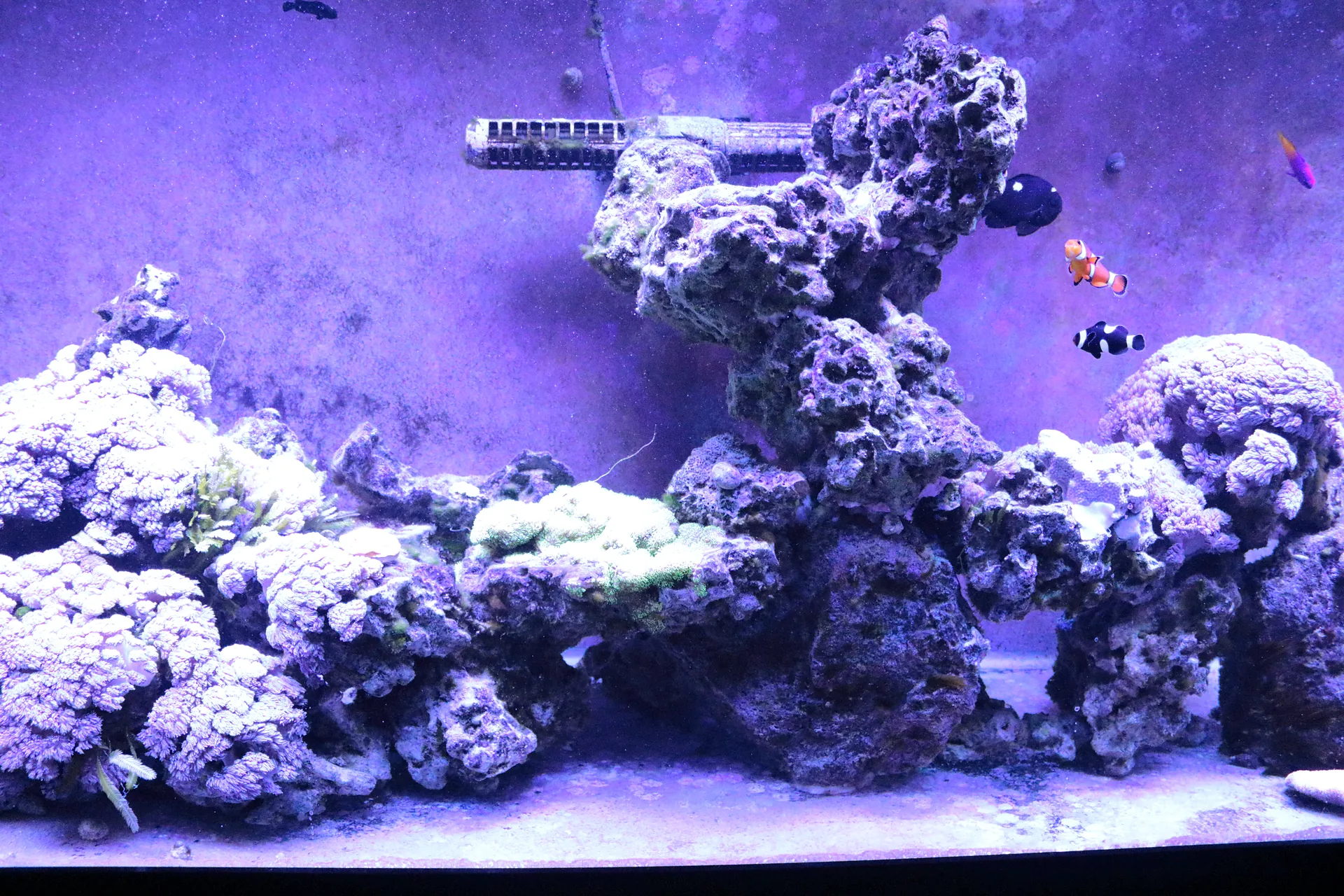
In a reef tank, the live rock and sand host most of the bacteria that a freshwater canister filter would. Many reefers also run a protein skimmer, which pulls waste out before it breaks down. There’s no direct freshwater equivalent.
Corals bring chemistry
If you add corals, you’ll learn three new numbers: alkalinity, calcium and magnesium. Soft corals barely touch them; stony corals use them up and need them topped up. Start with hardy first corals and grow into it.
Compatibility is stricter
“Reef safe” means a fish leaves corals and invertebrates alone, and plenty of popular fish aren’t. Many marine fish also won’t tolerate their own kind. Check each fish’s profile in our Species Guide before you buy.
Our advice for the switch
- Go a little bigger than you think. A 30–40 gallon tank is easier to keep stable than a 10 gallon nano.
- Fish-only first is fine. A fish-only tank with live rock is a great way to learn salinity and maintenance before adding corals.
- Ask questions early. Post your plan in the General forum before you buy equipment, and we’ll tell you what we’d change.
Saltwater isn’t harder than freshwater, just different, and if you’ve kept a freshwater tank healthy for a while, you already have the most important skill: paying attention.