 Sold out
Corals · LPS coral
Tonga Mussa Coral
Homophyllia sp.
Also called Tonga Mussa, Tonga-Mussa, Rare Tonga Mussa, Rare Tonga Mussa (Green), Rare Tonga Mussa (Red), Mussa coral
- CareModerate
- Reef safeYes
- TemperamentSemi-aggressiveNight sweeper tentacles sting nearby corals
- Favorite foods
- Light (zooxanthellae)
- Mysis shrimp
- Brine shrimp
- LifespanNo fixed lifespan
- IUCN statusNot Evaluated
Quick answers
- How hard is it to keep?
- Care level: Moderate.
- Is it reef safe?
- Yes. Harmless to fish and invertebrates; Saltwaterfish.com rates bowerbanki reef, coral and invertebrate safe and Fishkeeper rates Australian scolys excellent for reef aquariums.
- What does it eat?
- Light (zooxanthellae)
- Mysis shrimp
- Brine shrimp
- How long does it live?
- No fixed lifespan.
- What are good tankmates?
- Other Homophyllia, Micromussa and scolys, with several inches between colonies
- Low-light LPS on the lower rockwork or sand bed, spaced apart
- Peaceful reef fish such as clownfish, gobies and cardinalfish
- Reef-safe snails and other clean-up crew
The 30-second version
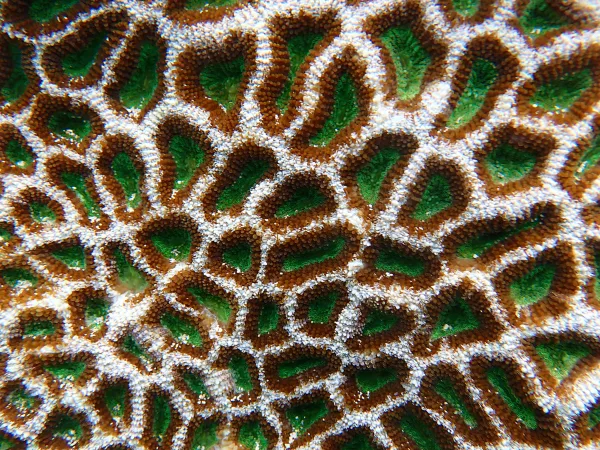
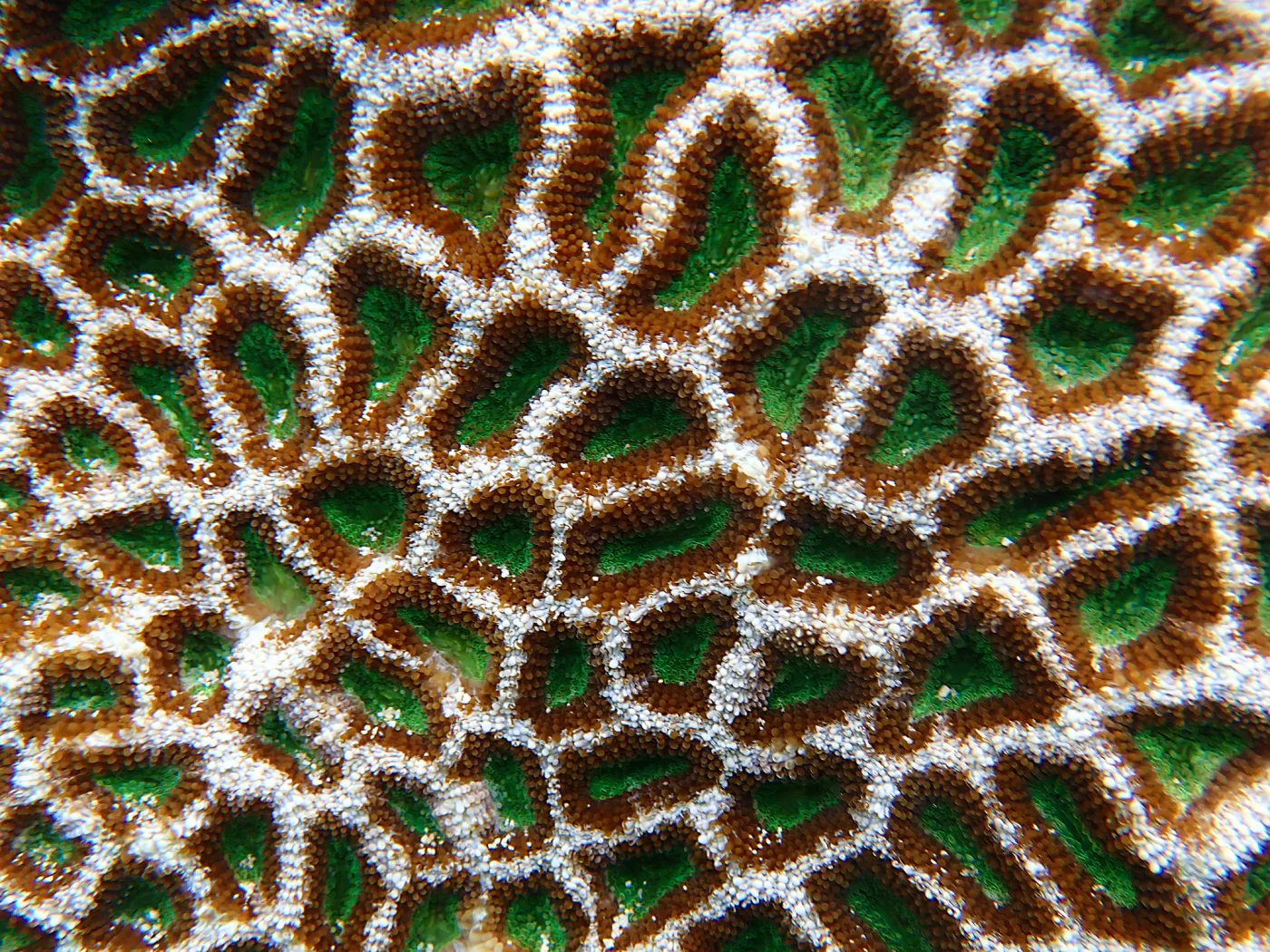
The Tonga Mussa is a coral from the island country of Tonga, far out in the Pacific Ocean. It is made of many fat, fleshy polyps sitting side by side. A polyp is a small animal with a mouth in the middle. Under the soft flesh, each polyp builds a hard cup of stone. The flesh looks bumpy, like it is covered in tiny beads. Most Tonga Mussas are red, green or brown, often with gray patches. Tiny algae live inside the coral. They use light to make food for it. At night the coral puts out little arms to catch bits of food. Some of those arms sting, so give it space from other corals. Scientists are not sure which kind of coral it is. It looks a lot like a coral called a 'bowerbanki'.
Water & care
There are no care sheets for the Tonga Mussa itself, so its care is inferred from its closest relatives, H. bowerbanki and H. australis, which care sheets describe as fairly forgiving LPS corals. Ratings vary: Saltwaterfish.com, Reef Builders and a Colorado reef club rate bowerbanki easy, and Reef Chasers and LiveAquaria call Australian scolys beginner-friendly, while Reef Chasers, Top Shelf Aquatics and LiveAquaria rate bowerbanki Moderate and Reeflex lists H. australis as for advanced aquarists only. It is rated Moderate here because every piece is a wild-collected import of uncertain identity that needs a stable, established reef: steady alkalinity, low to moderate light, gentle flow, regular small meaty feedings and room from stinging neighbors. Bowerbanki-type corals can take a long time to settle in and fully inflate after a move, so be patient before relocating them.
| Parameter | Keep it at | Where that sits on the usual reef range |
|---|---|---|
| Temperature | 75–80 °F | |
| Salinity (SG) | 1.024–1.026 | |
| pH | 8.1–8.4 | |
| Alkalinity | 8–10 dKH | |
| Calcium | 400–450 ppm | |
| Magnesium | 1,250–1,350 ppm | |
| Nitrate | 5–15 ppm | |
| Phosphate | 0.03–0.1 ppm |
No species-specific data exist; these ranges combine care sheets for H. bowerbanki and H. australis. Top Shelf (bowerbanki): 76-80°F, SG 1.025-1.026, pH 8.1-8.4, 8-10 dKH, calcium 400-450 ppm, magnesium 1250-1350 ppm, nitrate about 5-15 ppm and phosphate 0.03-0.1 ppm. Reef Chasers: pH 8.0-8.4, 8-9 dKH, calcium 400-450, nitrate 5-10, phosphate 0.05-0.1. LiveAquaria: 72-78°F, pH 8.1-8.4, 8-12 dKH, SG 1.023-1.025. Tidal Gardens warns that tissue recession can start around 30-40 ppm nitrate, and Top Shelf notes that ultra-low nutrients mute colors. Stable alkalinity matters most.
Feeding
DietPhotosynthetic
Favorite foods
- Mysis shrimp
- Enriched brine shrimp
- Finely chopped krill or clam
- LPS pellets
- Fine coral foods and zooplankton powders
Most of its energy comes from symbiotic algae, but relatives such as bowerbanki are eager eaters that catch frozen, liquid and pellet foods. Target feed small meaty foods 1-3 times a week (Top Shelf suggests 1-2 times for bowerbanki and 2-3 times for scolys), at night or whenever the feeding tentacles are out, and pause the pumps briefly so food is not blown away. Keep portions small, remove leftovers and watch nitrate and phosphate when feeding more; Tidal Gardens notes that tissue recession can start once nitrate reaches 30-40 ppm.
Tank & maintenance
- Aquascape
- Lower to middle rockwork or the sand bed, on a stable rock or plug with a smooth surface, angled slightly so waste and detritus slide off. Leave at least 4-6 in of open space around it. On the sand, raise it on a small rock so sand-sifters cannot bury it, and make sure nothing above can fall on it. No minimum tank size is published for this coral; for its relatives Saltwaterfish.com lists 15 gal and Reeflex about 40 gal (150 L).
- Lighting
- Low to moderate, roughly 75-150 PAR. Tidal Gardens finds about 100 PAR adequate for Australian scolys; Top Shelf suggests 60-120 PAR for scolys and 100-200 PAR (or 80-150 if it stays deflated) for bowerbanki. A blue-heavy spectrum holds color best. Start low in the tank and raise the light over 2-3 weeks; too much light quickly causes bleaching.
- Water flow
- Low to moderate, indirect flow that sways the tissue gently and keeps detritus off without pinning or tearing it; bowerbankis extend more in medium to lower flow. LiveAquaria lists medium to strong flow for bowerbanki, but most sources warn that strong direct flow damages the fleshy tissue.
Routine upkeep
Routine reef upkeep: regular partial water changes, testing and dosing alkalinity, calcium and magnesium as the reef's stony coral load needs, and checking nitrate and phosphate whenever you feed more. Target-feed 1-3 times a week. Siphon detritus from around the base and out of the valleys during water changes, keep neighbors trimmed back from its sweeper range, and watch the tissue edges and mouths for early signs of recession.
Temperament & tankmates
TemperamentSemi-aggressive
Ratings for the relatives range from Peaceful (Saltwaterfish.com) through Semi-aggressive (LiveAquaria, Top Shelf, Fishkeeper) to Aggressive (Reef Chasers; the Colorado club calls bowers 'very aggressive'). Most agree it is calm by day but sends out sweeper tentacles at night, and that its reach grows as the colony grows: Top Shelf says bowerbanki sweepers reach 2-3 in and hit chalices, favias and other meaty LPS hardest; Reef Chasers recommends at least 4-5 in of space for medium or large colonies, Top Shelf 6 in or more. It can also lose fights to stronger stingers, so keep it away from long-sweeper corals.
Reef safeYes
Harmless to fish and invertebrates; Saltwaterfish.com rates bowerbanki reef, coral and invertebrate safe and Fishkeeper rates Australian scolys excellent for reef aquariums. It is still a stinging coral: at night it extends sweeper tentacles, and bowerbankis are aggressive feeders that can take their feeding aggression out on neighboring corals. Leave about 4-6 in (10-15 cm) of open space around it.
Good tankmates
- Other Homophyllia, Micromussa and scolys, with several inches between colonies
- Low-light LPS on the lower rockwork or sand bed, spaced apart
- Peaceful reef fish such as clownfish, gobies and cardinalfish
- Reef-safe snails and other clean-up crew
Avoid
- Corals within sweeper-tentacle reach (less than about 4 in away)
- Strong direct flow aimed at the colony
- Very intense light without slow acclimation
- Fish that nip fleshy LPS polyps
- Sand-sifters or rocks that can bury or fall on it
Help it thrive
- Start low: place it on the sand or lower rockwork under modest light and move it up only if the color fades.
- Feed small meaty foods after the lights dim, when the tentacles are out, and pause the pumps for a few minutes.
- Keep nitrate measurable (about 5-15 ppm) and phosphate low but not zero; ultra-clean water mutes color.
- Give it room: at least 4-6 in from other corals, more as the colony grows.
- Be patient after a move; bowerbanki-type corals can take a while to settle in and fully inflate.
Common ailments
Tissue recession
- Signs
- Tissue pulling back from a ridge or the colony edge, exposed white skeleton, or a puffy, gaping mouth with tissue receding in a ring.
- Prevention
- Stable alkalinity; nutrients detectable but nitrate well below 30 ppm; low, indirect flow; no sharp rubble, vermetid snails or nipping fish near the colony.
- Treatment
- Reduce light by 20-30% and soften the flow, remove vermetid snails or other irritants, siphon trapped detritus, and give an iodine or antiseptic coral dip; then keep it in lower light with gentle random flow and stable alkalinity.
Bleaching from too much light
- Signs
- Colors fading to pale or white, or tissue staying deflated, soon after a move higher in the tank or a lighting change.
- Prevention
- Introduce it low and raise light over 2-3 weeks; keep it around 75-150 PAR.
- Treatment
- Move it lower or dim the light, keep water stable, and offer light feedings while it recovers.
Brown jelly infection after damage
- Signs
- Brown, jelly-like tissue breakdown appearing after an injury such as a tear, a fall or a cut.
- Prevention
- Avoid handling the fleshy tissue, keep it off sharp edges, and place it where nothing can fall on it.
- Treatment
- Move it to lower light and flow, stabilize water parameters, and give an iodine-based coral dip with improved aeration (Top Shelf).
This is general hobby guidance, not veterinary advice. Quarantine new arrivals and treat in a separate tank whenever you can.
Risks of owning one
- Its true identity is unknown, so care advice is borrowed from its closest relatives and individual colonies may behave differently.
- It stings nearby corals at night with sweeper tentacles, so poor spacing can kill a neighbor or the Tonga Mussa itself.
- Every piece is wild-collected from Tonga and slow growing, so losses are expensive and replacement stock depends on imports.
- Colors are naturally muted; a colony may look duller at home than under the seller's blue lighting.
- Strong flow, falling rocks or sand-sifters can tear or bury the fleshy tissue.
Propagation & fragging
DifficultyModerate AquaculturedRare or wild-caught
Not bred in captivity; all Tonga Mussas are wild imports. Its colonial relative H. bowerbanki is called easy to frag (Reef Builders) and is now sometimes aquacultured (LiveAquaria), so a colony can probably be cut into pieces like other colonial lobophylliids. Single-polyp scolys are poor candidates: Tidal Gardens and Top Shelf report low survival after cutting and very slow healing.
- Fragment only a healthy, fully inflated colony.
- Cut cleanly through the skeleton with a diamond saw.
- Seal the cut edges with a thin rim of epoxy and mount each piece on a plug or rock.
- Support healing with iodine or amino-acid supplements, as Top Shelf suggests after cutting.
- Keep the pieces in pristine, stable water with strong but gentle flow and expect a long recovery.
Deep dive The science, history and family tree
The science
Homophyllia Brüggemann, 1877 is a genus of zooxanthellate large-polyp stony corals in the family Lobophylliidae (WoRMS). WoRMS accepts two species: H. australis, the solitary 'Australian scoly', with saucer-shaped corallites under 60 mm across that sometimes have 2-4 centers, and H. bowerbanki, an encrusting colonial coral with cerioid, irregularly angular corallites, usually with a conspicuous central corallite (SeaLifeBase, after Veron). Both were long placed in Acanthastrea or Scolymia; the 2016 revision by Arrigoni and colleagues moved them to Homophyllia and merged the hobby's 'Acanthastrea hillae' into H. bowerbanki. 'Tonga Mussa' (or 'Tonga-Mussa') is not a scientific name. Reef Builders coined it before 2015 for a colonial lobophylliid LPS seen only in shipments from Tonga, describing it as a slight variation of H. bowerbanki with large, well-defined corallites, strongly beaded polyp tissue and muted red, green, brown or grayish color. Its identity has never been confirmed: Reef Builders also considered Micromussa pacifica and an unrecognized Lobophyllia, and one experienced hobbyist suggests a Tongan morph of H. bowerbanki. This profile therefore treats it at genus level as Homophyllia, with low confidence. The name has nothing to do with the true Mussa angulosa, a Caribbean and Gulf of Mexico coral. Like their relatives, these corals get much of their energy from symbiotic algae; at night they extend feeding tentacles to catch plankton, along with stinging sweeper tentacles that defend their space. Both Homophyllia species are listed on CITES Appendix II.
- Appearance
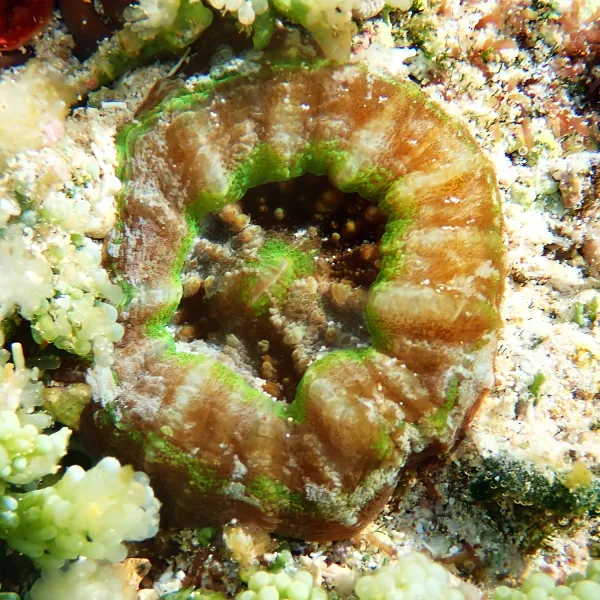
- A colony of rounded to angular, fleshy polyps, each over a large, well-defined corallite, with the soft parts of neighboring polyps clearly separated from one another. The tissue has a pronounced beaded texture that can look like ridges when the polyp is open. Reef Builders reports red, green, brown and grayish patches, never as saturated as a typical bowerbanki; the red form looks a muted red under white light. Separated corallites are said to be almost indistinguishable from a green Australian scoly. Trade lots are sold simply as green or red, medium to large. Look-alikes: Homophyllia bowerbanki ('bankies', usually brighter, sometimes with Master, UFO or Warpaint patterns); Micromussa pacifica ('mini scoly', heads up to about 25 mm, often with symmetrical radial patterns and several mouths); Acanthastrea pachysepta, which has isolated enlarged septa; the Tongan scoly (Lobophyllia vitiensis), a mostly single large polyp sold separately as a scoly; and Lobophyllia/Symphyllia 'lobos', which wholesalers also list separately.
- Native range
- Aquarium specimens are known only from exports out of Tonga in the South Pacific; Reef Builders says it has only seen the coral imported from Tonga, and Miami wholesalers list it as 'Tonga Mussa'. The genus ranges over the Indo-West Pacific: SeaLifeBase gives H. bowerbanki from Indonesia to Melanesia, north to Japan and south to Australia, and H. australis from Indonesia to Norfolk Island, north to Japan and south to Australia. Neither range explicitly includes Tonga, so the Tongan population (or species) is not documented in those references.
- Habitat
- Specific habitat data for the Tongan coral are not published. In the genus, H. bowerbanki lives on lower reef slopes away from wave action and in shallow reef environments from 0 to 30 m and does well in sedimented, turbid water; H. australis occurs on reefs and on rocky headlands at high latitudes from 0 to 40 m (SeaLifeBase, after Veron). Both grow attached to hard substrate.
- Size
- . No colony size has been published for the Tonga Mussa; Reef Builders says only that its corallites are roughly the size of a medium Australian scoly, and wholesale pieces are sold as M/L. In the genus, H. bowerbanki is described as encrusting and usually small (SeaLifeBase), while solitary H. australis heads are under 60 mm (2.4 in) across per SeaLifeBase, 3 in (7.5 cm) per Fishkeeper, up to 4 in per Reef Chasers and up to 15 cm (5.9 in) per Reeflex. Because those figures describe single scoly heads, not colonies, no maximum is given here.
- Lifespan
- No fixed lifespan. Like other colonial stony corals, a colony can live for many years in a stable aquarium as long as conditions stay good; growth is slow.
- Conservation
- Not Evaluated. The Tonga Mussa itself has no assessment because its species is unknown. Within the genus, SeaLifeBase (IUCN Red List 2025-2) lists H. bowerbanki as Least Concern and H. australis as Vulnerable (A3ce), both assessed 11 July 2022. Like all stony corals, both species are on CITES Appendix II, so wild colonies need export permits. Tonga Mussas are wild-collected imports; Reef Builders calls the coral 'not rare', even though wholesalers label it 'Rare'
In the aquarium vs in the wild
In your aquarium
An unusual display LPS for the lower reef or sand bed, collected mainly by keepers of 'Acans', bowerbankis and scolys who want a Tonga-only form.
On the reef
A slow-growing reef-building stony coral that lays down calcium carbonate, feeds partly on small plankton at night, and defends its space with sweeper tentacles.
History
The genus Homophyllia was described by Brüggemann in 1877, but for most of the hobby's history its two species were sold as 'Acans' (Acanthastrea bowerbanki and A. hillae) and 'Australian Scolymia'. In 2016 Arrigoni and colleagues used DNA and skeletal features to move both to Homophyllia and merge 'hillae' into bowerbanki. Reef Builders coined the name 'Tonga-Mussa' sometime before 2015 for a distinctive LPS it saw only in Tongan shipments, and in 2020 editor Jake Adams wrote that he had hunted for a good colony for over five years before finding one at a Colorado store; he described the coral as not rare and not highly sought after, with colonies that usually look unremarkable. By 2026 Miami wholesalers were listing 'Rare Tonga Mussa' in green and red, medium to large, alongside separate Tongan lobos, Symphyllias and scolys. The trade word 'mussa' probably echoes Mussa (Symphyllia), an old name for the lobo brain corals now merged into Lobophyllia, rather than the Caribbean genus Mussa.
Evolution & relatives
Homophyllia belongs to the Lobophylliidae, the family that also holds the lobo brain corals (Lobophyllia, which has absorbed Symphyllia, Australomussa and Parascolymia), Acanthastrea, Micromussa and most chalice corals. WoRMS places the family in the suborder Vacatina, the 'robust' branch of stony corals. The 2016 revision separated Homophyllia from Micromussa by fine skeletal details: Micromussa has medium tooth spacing on its septa (0.3-1.0 mm) and strong, pointed granules, while Homophyllia has wide tooth spacing (over 1.0 mm) and weak, rounded, evenly spread granules. Those differences are almost invisible in living corals, which is why look-alikes such as the Tonga Mussa, the 'mini scoly' Micromussa pacifica and bowerbanki morphs are so hard to tell apart without examining the skeleton or DNA. The Atlantic Mussa angulosa, the only species of the true genus Mussa, is placed in a different family and lives only in the Caribbean, the Bahamas and the Gulf of Mexico.
Family tree, from kingdom down
- Kingdom Animalia Animals Animals are living things made of many cells that must eat food to live. Fish, corals, crabs, snails and sea stars are all animals.
- Phylum Cnidaria Cnidarians Cnidarians are soft animals with tentacles. The tentacles have tiny stinging cells. Corals, sea anemones and jellyfish all belong here.
- Subphylum Anthozoa Corals and sea anemones These cnidarians spend their whole lives as polyps: a tube with a mouth ringed by tentacles. Unlike jellyfish, they never swim around as a bell-shaped medusa.
- Class Hexacorallia Hexacorals In this group the tentacles and body parts come in sixes or multiples of six. It includes stony corals, sea anemones, mushroom corals and zoanthids.
- Order Scleractinia Stony corals Stony corals build hard skeletons out of limestone under their soft polyps. Over many years, these skeletons pile up and make coral reefs.
- Suborder Vacatina Robust corals
- Family Lobophylliidae Lobophylliid corals These stony corals have big, fleshy, colorful polyps over a hard skeleton. Acan and Lobo corals belong here.
- Genus Homophyllia
See it on the Tree of Life Compare with another species
Closest relatives
- Homophyllia bowerbanki Bowerbanki ('bankie', Acan bowerbanki) Same genus; the coral the Tonga Mussa most resembles
- Homophyllia australis Australian scoly Same genus; solitary species whose corallites match the Tonga Mussa's in size
- Micromussa pacifica Mini scoly Same family; alternative identity suggested by Reef Builders, known from the South Pacific
- Micromussa lordhowensis Acan Lord Same family; a smaller-polyped colonial 'Acan' Read guide · Compare
- Lobophyllia vitiensis Tongan scoly Same family; another Tongan LPS, sold separately as a scoly Read guide · Compare
- Lobophyllia Lobo brain coral Same family; includes the old genus Mussa (Symphyllia), source of the 'mussa' trade name Read guide · Compare
- Mussa angulosa Spiny flower coral Not closely related; the only true Mussa, found in the Caribbean and Gulf of Mexico
Older scientific names: Acanthastrea bowerbanki, Acanthastrea hillae, Scolymia australis.
Fun facts
- The name 'Tonga-Mussa' was invented by the Reef Builders team, and it stuck in the trade.
- A Reef Builders editor searched for a good Tonga Mussa colony for more than five years.
- Wholesalers call it 'Rare', but the people who named it say it is not rare and that most colonies look rather plain.
- Despite the name, it is not a Mussa: the only true Mussa lives in the Caribbean, half a world away from Tonga.
- Telling Homophyllia from Micromussa can come down to the spacing of tiny teeth on the skeleton's septa, under 1 mm apart in Micromussa.
Learn more
- Reef Builders: We've been hunting a 'Tonga-Mussa' for over five years reefbuilders.com
- Reef Builders: Homophyllia bowerbanki, a reintroduction to 'Bankies' and 'Hillae' reefbuilders.com
- Reef Chasers: Bowerbanki coral care guide reefchasers.com
- WoRMS: Homophyllia marinespecies.org
Sources
- WoRMS: Homophyllia Brüggemann, 1877 marinespecies.org
- Reef Builders (2020): We've been hunting a 'Tonga-Mussa' for over five years reefbuilders.com
- Coral Monsters (Miami) stock list 6.10, Reef2Reef sponsor thread reef2reef.com
- Reef2Reef: Australomussa / Parascolymia confusion (Tonga-Mussa as a bowerbanki morph) reef2reef.com
- Reefs.com: Micromussa pacifica, the newly described mini scoly reefs.com
- Arrigoni et al. 2016, revision of Micromussa and Homophyllia (JCU record) researchonline.jcu.edu.au
- SeaLifeBase: Homophyllia bowerbanki sealifebase.se
- SeaLifeBase: Homophyllia australis sealifebase.se
- Reef Chasers: Bowerbanki coral care guide reefchasers.com
- Reef Chasers: Scolymia coral care guide reefchasers.com
- Top Shelf Aquatics: Beetlejuice Bowerbankii coral topshelfaquatics.com
- Top Shelf Aquatics: Bleeding Apple Scoly coral care topshelfaquatics.com
- LiveAquaria: Australian Bowerbanki Coral (Homophyllia bowerbanki) liveaquaria.com
- LiveAquaria: Australian Scolymia Coral, Red liveaquaria.com
- Saltwaterfish.com: Acan Bowerbanki care facts saltwaterfish.com
- Fishkeeper: Australian Scolymia Coral fishkeeper.co.uk
- Tidal Gardens: Scolymia coral care tidalgardens.com
- Reeftopia: Scolymia, an in-depth guide reeftopia.com.au
- Reeflex: Homophyllia australis reeflex.net
- Reef Builders (2024): Bowers are the perfect LPS coral reefbuilders.com
- Marine Aquarium Societies of Colorado: Coral spotlight, Homophyllia bowerbanki marinecolorado.org
- Wikipedia: Lobophyllia (synonyms incl. Mussa (Symphyllia)) en.wikipedia.org
- Wikipedia: Mussa angulosa en.wikipedia.org
Care facts
The care facts on this guide and its product pages (care level, reef safety, temperament, size, tank, diet, flow, purpose, foods, acclimation and origin) combine 15 independent sources, checked October 25, 2026.
- Bowerbanki Coral Care Overview Reef Chasers
- TSA Beetlejuice Bowerbankii Coral Top Shelf Aquatics
- Australian Bowerbanki Coral 2" WYSIWYG (Homophyllia bowerbanki) LiveAquaria
- Acan Bowerbanki: Green - Australia Saltwaterfish.com
- Australian Scolymia Coral Fishkeeper (Maidenhead Aquatics)
- Scolymia: An in-depth guide Reeftopia
- Homophyllia australis Reeflex (Meerwasser-Lexikon)
- Bowers are the Perfect LPS Coral Reef Builders (Jeremy Gay)
- Coral Spotlight | Homophyllia Bowerbanki Marine Aquarium Societies of Colorado (mikejrice), from Captive Coral
- Scolymia Coral Care Tidal Gardens
- Homophyllia australis summary SeaLifeBase
- Homophyllia bowerbanki, a reintroduction to 'Bankies' and 'Hillae' Reef Builders (Jake Adams)
- We've Been Hunting a 'Tonga-Mussa' for Over Five Years! Reef Builders (Jake Adams)
- Coral Monsters Stock List 6.10 Coral Monsters, Miami (Reef2Reef sponsor list)
- Tonga Corals (export price list) LiveStockUSA
Scientific names and classification follow the World Register of Marine Species (AphiaID 509201). Last updated October 25, 2026.
Shop this species
Search the shop →Sold out right now. We restock weekly, so check back soon.
Sold out
 Sold out