 Sold out
Invertebrates · Snail
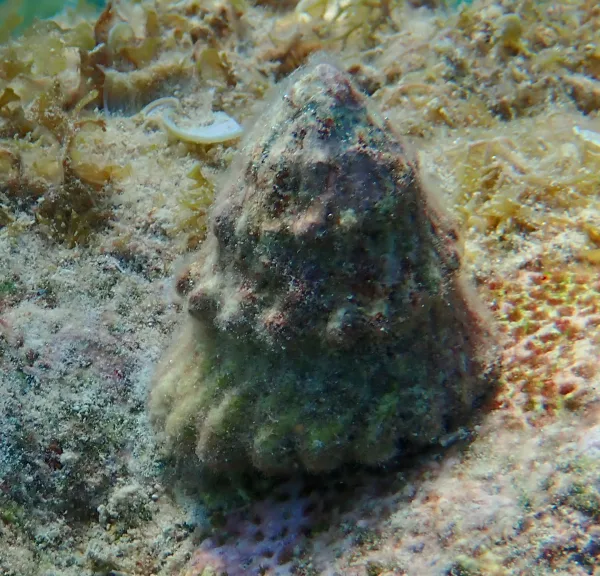
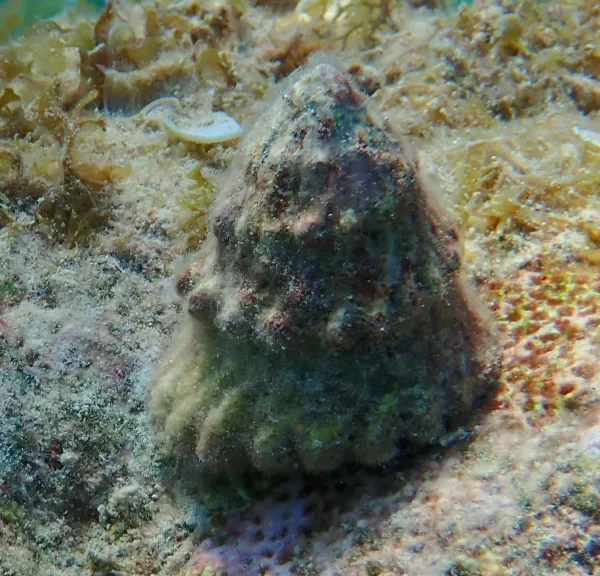
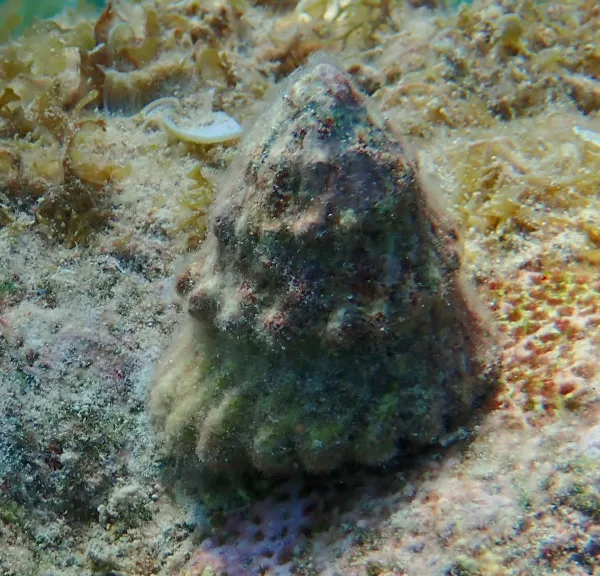
Astrea Snail
Lithopoma sp.
Also called Astraea Turbo Snail, Astrea/Turbo Snail, Astraea Star Snail, Astraea Conehead Snail, Spiny Star Astrea, Star Snail, West Indian Starsnail, American Starsnail
- CareEasy
- Reef safeYes
- TemperamentPeacefulHarmless grazer; often the victim of hermit crabs
- Favorite foods
- Film algae and diatoms
- Hair algae / cyanobacteria
- Nori or algae wafers
- Max size1.5 in (3.8 cm)
- Min tank20 gal
- LifespanAbout 3-5 years in captivity according…
- IUCN statusNot Evaluated
Quick answers
- How big does the Astrea Snail get?
- Up to 1.5 in (3.8 cm).
- What size tank does it need?
- At least 20 gallons.
- How hard is it to keep?
- Care level: Easy.
- Is it reef safe?
- Yes. Fully reef safe: it does not eat corals, tube worms, sponges or other invertebrates and grazes only algae and biofilm (Top Shelf Aquatics, Aquarium Breeder).
- What does it eat?
- Film algae and diatoms
- Hair algae / cyanobacteria
- Nori or algae wafers
- How long does it live?
- About 3-5 years in captivity according to one care guide (Aquarium Breeder).
- What are good tankmates?
- Corals of all kinds, if frags are glued down
- Most peaceful reef fish that do not eat invertebrates
- Other peaceful grazers in sensible numbers where algae is plentiful
The 30-second version
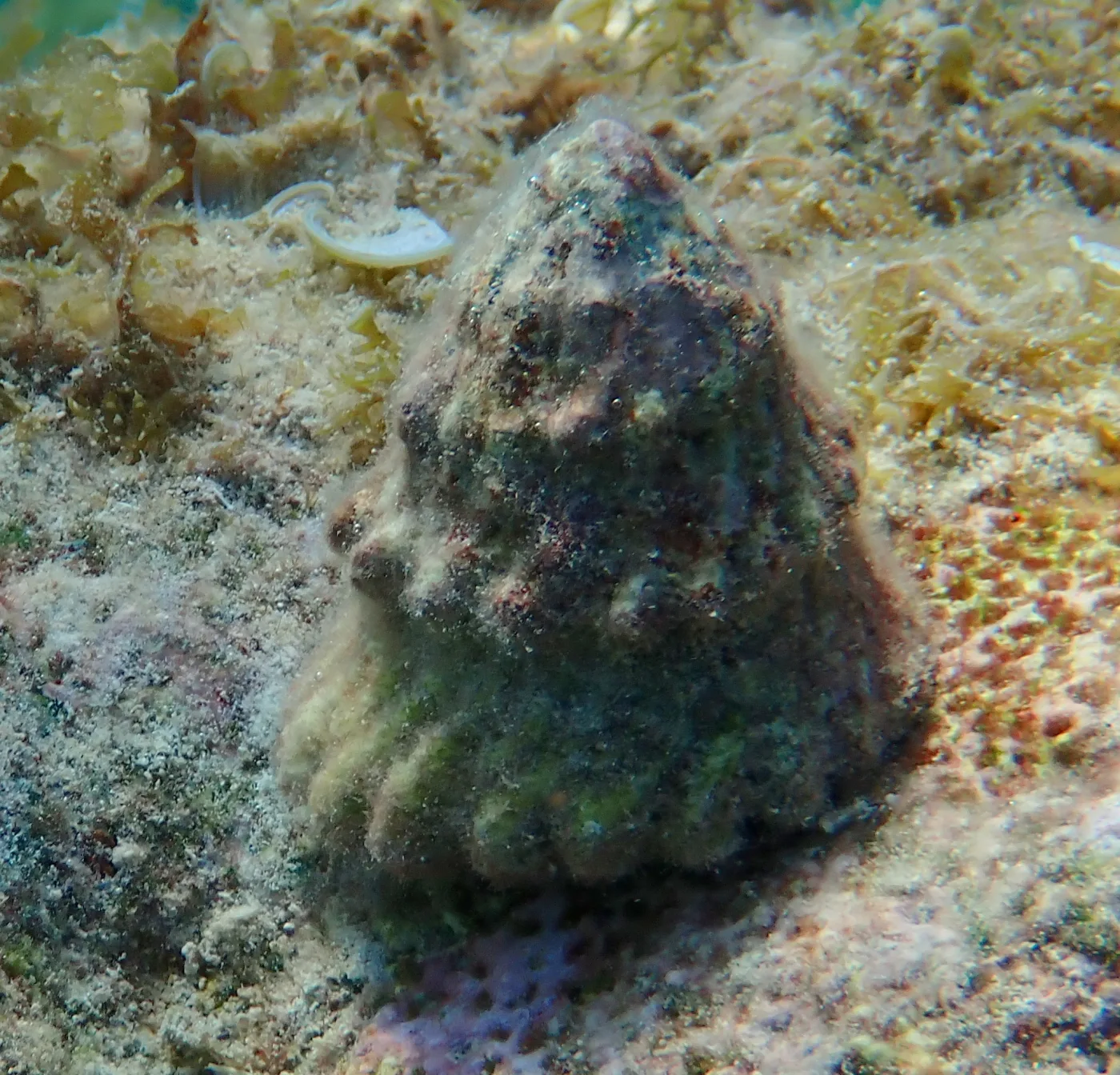
The astrea snail is a small snail with a shell shaped like a cone or a little pyramid. Some have bumps around the edge, so from above the shell looks a bit like a star. Most are olive green or white. They come from warm, shallow water around Florida and the Caribbean Sea. An astrea snail is a tiny cleaner. It creeps over rocks and glass and scrapes off the thin green and brown film that grows there. It works hardest at night. It has one big weakness: if it falls on its back, it often cannot turn over by itself. Then it needs a person to flip it back up. A hard little door on its foot closes the shell tight when it is scared.
Water & care
Easy to keep once it is settled in an established tank with algae to graze. Acclimate slowly by drip for 1-3 hours, because it reacts badly to small, quick changes in salinity, temperature or pH, and never expose it to copper. Put new snails right side up on rock, not on the sand. Its main needs are steady food and a quick rescue if it falls on its back. Keep calcium and alkalinity in reef range so the shell stays healthy, and keep nitrate low.
| Parameter | Keep it at | Where that sits on the usual reef range |
|---|---|---|
| Temperature | 72–78 °F | |
| Salinity (SG) | 1.023–1.025 | |
| pH | 8.1–8.4 | |
| Alkalinity | 8–12 dKH | |
| Calcium | 350–450 ppm | |
| Magnesium | 1,250–1,350 ppm | |
| Nitrate | 0–20 ppm |
LiveAquaria and Aquatic Community give 72-78 F, SG 1.023-1.025, pH 8.1-8.4 and 8-12 dKH. Top Shelf Aquatics prefers 75-79 F, SG 1.024-1.026, 8-11 dKH, calcium 380-450 ppm and magnesium 1250-1350 ppm; Aquarium Breeder accepts 68-80 F and asks for nitrate under 20 ppm and calcium 350-450 ppm. Sensitive to high nitrate and to copper. Low alkalinity, calcium or pH shows up as shell pitting. Larvae of the genus cannot develop below about 30 ppt salinity, a reminder to keep salinity at full reef strength.
Feeding
DietHerbivore
Favorite foods
- Film algae and diatoms on rock and glass
- Cyanobacteria
- Short hair algae and other microalgae
- Dried seaweed (nori)
- Algae wafers and herbivore pellets
Grazes constantly, mostly in the evening and at night. Sources disagree on hair algae: LiveAquaria and several hobby guides say it eats it, while Top Shelf Aquatics says it mostly sticks to film algae and ignores long green hair algae and turf. Stock to match the algae: Fragbox suggests about one per 3 gallons and Fishkeeper about one per 100 litres when no other grazers are kept; start low and add more if algae remains. When the glass and rock stay clean, feed nori, algae wafers or vegetable-based pellets near the snails, or it will starve.
Tank & maintenance
- Minimum tank
- 20 gallons
- Aquascape
- An established tank with plenty of live rock to graze. Astreas are poor climbers and prefer the bottom and gently sloped rock, so avoid steep, smooth drops they can fall from.
- Lighting
- Any reef or fish-only lighting; enough light to grow some film algae helps feed it.
- Water flow
- No strong preference reported; Top Shelf Aquatics suggests moderate water movement and warns that placement and flow matter because a dislodged snail may not right itself.
Routine upkeep
Check the snails daily for the first 10 days or so and then every few days: flip any that are upside down and set them on rock. Remove any snail that hangs loosely out of its shell or smells, since a dead snail fouls water fast. Feed nori or algae wafers when algae runs short, and keep calcium and alkalinity steady for shell growth.
Temperament & tankmates
TemperamentPeaceful
Completely harmless; it has no way of attacking anything and relies on its shell and operculum for protection. It is far more often the victim: hermit crabs (especially orange-claw hermits) kill astreas for their shells, upside-down snails are easy prey, and wrasses, puffers, triggerfish, large crabs, coral banded shrimp and hungry bumble bee snails may also attack them.
Reef safeYes
Fully reef safe: it does not eat corals, tube worms, sponges or other invertebrates and grazes only algae and biofilm (Top Shelf Aquatics, Aquarium Breeder). The only risk is accidental: a snail crossing a loose frag plug may knock it over, so glue frags down.
Good tankmates
- Corals of all kinds, if frags are glued down
- Most peaceful reef fish that do not eat invertebrates
- Other peaceful grazers in sensible numbers where algae is plentiful
Avoid
- Hermit crabs, especially orange-claw hermits (Calcinus tibicen), unless plenty of empty shells are provided
- Triggerfish, pufferfish and snail-eating wrasses
- Large crabs and coral banded shrimp
- Predatory snails such as whelks
- Copper-based medications
Help it thrive
- Add astreas to a mature tank that already has film algae, a few at a time.
- Drip-acclimate for 1-3 hours and place each snail right side up on rock.
- Turn over any snail you find on its back; a snail left upside down can starve or be eaten by hermit crabs.
- Keep spare empty shells in the tank if you keep hermit crabs, and skip orange-claw hermits altogether.
- When the glass stays spotless for days, offer nori or algae wafers: a very clean tank can mean hungry snails.
Common ailments
Upside-down stranding
- Signs
- Snail lying on its back on the sand or rock with its foot waving, unable to turn over; it soon weakens and may be killed by hermit crabs.
- Prevention
- Avoid steep, smooth rockwork; keep hermit crabs and snail-flipping fish out; keep snails well fed, since weak, hungry snails fall more often.
- Treatment
- Turn it upright and place it against rock; check it again over the following days.
Starvation
- Signs
- Snail wanders the glass without stopping to graze, becomes sluggish, falls off rock repeatedly, and eventually dies in a very clean tank.
- Prevention
- Stock to match the available algae and supplement with nori, algae wafers or vegetable pellets.
- Treatment
- Place food right beside the snail and reduce the number of grazers in the tank.
Acclimation shock
- Signs
- Snail stays retracted or lies limp for days after purchase; the operculum does not seal tightly.
- Prevention
- Drip-acclimate for 1-3 hours, match temperature and salinity, and add snails only to a fully cycled tank.
- Treatment
- Set it upright in stable water near algae; there is no medication.
Shell erosion
- Signs
- Pitted, chalky or thinning shell, sometimes with the tip worn away.
- Prevention
- Keep alkalinity, calcium and pH in reef range and avoid long periods of low pH.
- Treatment
- Correct water chemistry; the snail will slowly lay down new shell.
Copper poisoning
- Signs
- Sudden deaths of snails and other invertebrates after a medication was dosed.
- Prevention
- Never use copper in a tank with invertebrates; treat fish in a separate hospital tank.
- Treatment
- Move survivors to clean water and remove copper with carbon or a copper-removing resin and water changes.
This is general hobby guidance, not veterinary advice. Quarantine new arrivals and treat in a separate tank whenever you can.
Risks of owning one
- Cannot reliably right itself; snails left on their backs die or are eaten.
- Overstocking leads to starvation once the algae is gone, and dead snails can spike ammonia.
- Hermit crabs may kill astreas for their shells.
- Very sensitive to copper and to sudden changes in water chemistry.
- Short natural lifespan; some losses within a few years are normal.
- Wild-harvested; a lot may mix species of different adult sizes.
Breeding
DifficultyVery hard Captive-bredRare or wild-caught
Sexes are separate and look alike. Hobby guides describe astreas as broadcast spawners that release eggs and sperm into the water; one guide says females can release over a million eggs and reach maturity at 6-8 months, and Aquatic Community and a Florida photo record also describe eggs being laid on hard surfaces. The larvae drift as trochophores and veligers before settling, and fertilisation and development fail below about 30 ppt salinity. Spawning happens in mature aquariums and may briefly cloud the water, but juveniles rarely survive pumps, skimmers and filter feeders, so home-grown astreas are uncommon. No commercial aquaculture of astreas was found; trade stock is wild-harvested.
- Keep a group of healthy adults in a mature tank; males and females cannot be told apart.
- Spawning, if it happens, can briefly make the water cloudy; this is normal.
- Larvae drift for some days before settling and are mostly lost to filtration and predators in a display tank.
- Raising them would need a separate larval tank at full salinity with algae-coated surfaces for settlement; no tested hobby protocol was found.
Deep dive The science, history and family tree
The science
Lithopoma J. E. Gray, 1850 is a genus of turban snails (Turbinidae: Turbininae) from the tropical western Atlantic, often called star snails. WoRMS accepts six species: L. americanum, L. brevispina, L. caelatum, L. phoebium, L. tectum and the type species L. tuber. Lithopoma was long treated as a subgenus of Astraea, which is why the aquarium trade still sells these animals as 'Astraea' or 'Astrea' snails, most often under the label 'Astraea tecta' (properly Lithopoma tectum). The shell is solid, imperforate and elevated-conic to top-shaped, often with oblique folds and a ridged or knobbed edge that gives a star-like outline, and the aperture is closed by a thick, calcareous operculum.
Two species make up most trade stock. Lithopoma americanum, the American starsnail, reaches about 4 cm and lives from the intertidal to about 33 m; in Florida it is one of the two most heavily harvested herbivorous snails in the marine-life fishery (Herbert et al. 2023). Lithopoma tectum, the West Indian starsnail, reaches about 6 cm and lives from the intertidal to about 10 m on rocky shores in the Caribbean, the Gulf of Mexico, the Lesser Antilles and off Brazil. Florida landings record both under a single 'star snail' code, so a lot of 'astreas' from a Florida wholesaler is likely to contain more than one species. Astreas are herbivorous grazers of film algae, diatoms and cyanobacteria on hard surfaces. Sexes are separate and hobby guides describe them as broadcast spawners whose larvae drift as trochophores and veligers before settling. Florida populations mature quickly and reach full size within about two years.
- Appearance
- A small cone- or pyramid-shaped shell, usually 1/2-1 in when sold and up to about 2 in in the largest animals. Colour is olive green, greenish-brown or whitish, and the shell is often covered in film algae or coralline algae that can turn it pink or purple. Many shells have folds and a ridge or short spines around the base, giving a star-like outline from above. The opening is closed by a hard, white, chalky trapdoor (operculum). American starsnails (L. americanum) are smaller, up to about 1.6 in, while West Indian starsnails (L. tectum) are taller and can pass 2 in. Look-alikes: other cone-shaped snails, such as the fenestrate top snail (Tectus fenestratus), are sometimes sold under the astrea name and are less hardy (Aquarium Breeder); trochus snails are more agile and better at righting themselves.
- Native range
- Tropical western Atlantic: Florida (including the Keys), the Gulf of Mexico, the Caribbean Sea and the Lesser Antilles; L. tectum also off Brazil. SeaLifeBase gives L. americanum as Western Central Atlantic (34 N-9 S).
- Habitat
- Shallow hard bottoms and rocky shores from the intertidal zone down to about 10 m (L. tectum) or 33 m (L. americanum), most often between 1 and 10 m (Aquarium Breeder). Grazes film algae on rock surfaces in relatively high-energy water. A Florida diver photographed a West Indian starsnail laying eggs off Pompano Beach in 2021.
- Size
- 1.5 in (3.8 cm). Retail care sheets list 1 in (LiveAquaria, BRS/ECC, Fragbox, Aquatics Unlimited) to 2 in (Quality Marine, That Pet Place, Aquarium Depot). Wild maxima: L. americanum 4.0 cm (1.6 in; SeaLifeBase), L. tectum 6.0-6.3 cm (2.4-2.5 in; SeaLifeBase, Wikipedia). Supplier sizes S/M, XL and JUMBO probably span this range; jumbos are probably L. tectum (an inference from size, not confirmed by the supplier).
- Lifespan
- About 3-5 years in captivity according to one care guide (Aquarium Breeder). A Florida field study found L. americanum reaches full size within 2 years and has a short lifespan (Herbert et al. 2023), so many aquarium snails may be near the end of their life within a few years.
- Conservation
- Not Evaluated. L. americanum and L. tectum are both Not Evaluated on the IUCN Red List (SeaLifeBase). In Florida they are harvested commercially for aquariums under a Saltwater Products License with Restricted Species and Marine Life endorsements, and landings are recorded under code 984 'Snail, star' (FWC). Herbert et al. (2023) call L. americanum one of the two most intensely harvested herbivorous snails in Florida; its fast growth may help stocks recover, but short lifespans make it prone to recruitment failure and mean hobbyists buy replacements often
In the aquarium vs in the wild
In your aquarium
Clean-up crew algae grazer: one of the most common snails in the trade for film algae, diatoms and cyanobacteria on rock and glass.
On the reef
A grazing herbivore of shallow western Atlantic rocky shores and reefs that keeps algal films cropped on hard surfaces.
History
John Edward Gray named the genus Lithopoma in 1850. Many of its species were described much earlier as Trochus, including L. tectum ([Lightfoot], 1786), L. americanum (Gmelin, 1791) and L. tuber (Linnaeus, 1758), the type species. For a long time Lithopoma was ranked as a subgenus of Astraea, and the reef hobby still sells these snails as 'Astraea' or 'Astrea' snails, usually labelled 'Astraea tecta'. Hobby guides describe them as some of the most commonly available snails in the trade. They are collected in Florida and the Caribbean, and in Florida they are a major part of the commercial marine-life fishery.
Evolution & relatives
Star snails belong to the Vetigastropoda, an old branch of snails that also includes abalones and top snails. Within the superfamily Trochoidea they sit in the turban snail family Turbinidae, subfamily Turbininae, alongside Turbo. Like other turban snails it closes its shell with a hard, calcareous operculum. The species sold as astreas are western Atlantic; WoRMS treats the older placements Astraea (Lithopoma) and Astralium (Lithopoma) as superseded ranks, and a Pacific species once placed in it, the wavy turban, is now Megastraea undosa. Fossil forms such as Astraea (Lithopoma) americana southbayensis appear in Florida fossil-shell records (Petuch 1994, cited by Wikipedia).
Family tree, from kingdom down
- Kingdom Animalia Animals Animals are living things made of many cells that must eat food to live. Fish, corals, crabs, snails and sea stars are all animals.
- Phylum Mollusca Molluscs Molluscs are soft-bodied animals, and many of them grow a hard shell. Snails, clams and octopuses are all molluscs.
- Class Gastropoda Snails and slugs Gastropods crawl on one big, slimy foot. Most carry a single coiled shell, but sea slugs have lost theirs.
- Subclass Vetigastropoda top snails, turban snails, abalones and kin
- Order Trochida Top and turban snails These sea snails have shells shaped like a spinning top or a turban. Many graze on algae on rocks.
- Superfamily Trochoidea
- Family Turbinidae Turban snails Turban snails have thick, rounded shells. They close the opening with a hard, round lid when they hide.
- Subfamily Turbininae
- Genus Lithopoma
See it on the Tree of Life Compare with another species
Closest relatives
- Lithopoma tectum West Indian starsnail Same genus; the species named by the trade label 'Astraea tecta'; up to about 6 cm
- Lithopoma americanum American starsnail Same genus; the main Florida Keys astrea, up to about 4 cm
- Lithopoma tuber Green starsnail Same genus; type species of Lithopoma
- Lithopoma caelatum Carved starsnail Same genus; western Atlantic
- Turbo castanea Chestnut turban Same subfamily (Turbininae); Florida's other heavily harvested aquarium turban snail Read guide · Compare
- Turbo fluctuosus Mexican turbo snail Same subfamily (Turbininae); eastern Pacific turban sold separately as the 'turbo snail' Read guide · Compare
Older scientific names: Astraea tecta, Astraea sp., Astraea (Lithopoma), Astralium (Lithopoma), Astraea tectum, Astraea americana, Lithopoma tectum americanum.
Fun facts
- 'Astraea tecta', the name on most astrea snail tags, is not a name WoRMS uses; the accepted name for that species is Lithopoma tectum.
- Florida's fishery records two different star snail species under a single 'Snail, star' code, so a bag of astreas can hold more than one species.
- Florida American starsnails reach their full size within about two years.
- Coralline algae often grows on astrea shells and can turn a green snail pink or purple.
- Unlike many snails, an astrea often cannot flip itself back over, so reef keepers routinely turn them upright by hand.
Learn more
- WoRMS: Lithopoma J. E. Gray, 1850 marinespecies.org
- Aquarium Breeder: Astrea snail detailed guide aquariumbreeder.com
- Top Shelf Aquatics: Astrea snail care guide topshelfaquatics.com
- LiveAquaria: Astraea Turbo Snail liveaquaria.com
Sources
- WoRMS: Lithopoma genus record and accepted species marinespecies.org
- SeaLifeBase: Lithopoma americanum summary sealifebase.se
- SeaLifeBase: Lithopoma tectum summary sealifebase.se
- Wikipedia: Lithopoma tectum en.wikipedia.org
- Wikipedia: Lithopoma americanum en.wikipedia.org
- Herbert, Hesterberg & Geiger 2023, Life history traits of Turbo castanea and Lithopoma americanum (J. Shellfish Res. 42), abstract complete.bioone.org
- FWC: American Starsnail marine life code myfwc.com
- FWC: West Indian Starsnail marine life code myfwc.com
- LiveAquaria: Astraea Turbo Snail care sheet liveaquaria.com
- Quality Marine: Astraea Turbo Snail qualitymarine.com
- Top Shelf Aquatics: Astrea Snail care guide topshelfaquatics.com
- Aquarium Breeder: Astrea Snail detailed guide aquariumbreeder.com
- Aquatic Community: Astrea snails aquaticcommunity.com
- That Pet Place: Astrea Snail thatpetplace.com
- Marine Aquarium Society of Colorado: Mollusk ID guide (Astrea snail) marinecolorado.org
- Fishkeeper: Turbo snail (Astraea spp.) fishkeeper.co.uk
- Jacksonville Shell Club: West Indian Star Snail depositing eggs jaxshells.org
Care facts
The care facts on this guide and its product pages (care level, reef safety, temperament, size, tank, diet, flow, purpose, foods, acclimation and origin) combine 18 independent sources, checked October 25, 2026.
- Astraea Turbo Snail (Astraea tecta) LiveAquaria
- Astraea Turbo Snail (Astraea tecta) Quality Marine
- Snail - Astrea (Astraea tecta) Aquatics Unlimited
- Astrea Snail - Astraea tecta That Pet Place
- Astrea Snail Invertebrate Care Guide Top Shelf Aquatics
- ECC Astraea Turbo Snail Bulk Reef Supply (Eye Catching Coral livestock)
- Astrea Snail - Detailed Guide: Care, Diet, and Breeding Aquarium Breeder
- Astraea Turbo Snail - Astraea tecta Aquarium Depot (Toronto)
- Clean up crew (reef aquarium) Portland Aquarium
- Astrea snails Aquatic Community
- Turbo snail (Astraea spp.) Fishkeeper (UK)
- Astrea Snail Fragbox
- Mollusk (Snail) ID Guide - Astrea Snail Marine Aquarium Society of Colorado
- Lithopoma americanum, American star snail SeaLifeBase
- Lithopoma tectum, West Indian starsnail SeaLifeBase
- Lithopoma tectum Wikipedia
- Herbert, Hesterberg & Geiger 2023, Life history traits of the herbivorous marine gastropods Turbo castanea and Lithopoma americanum (J. Shellfish Res. 42(1)), abstract Journal of Shellfish Research (BioOne)
- American Starsnail (Lithopoma americanum) - marine life code Florida Fish and Wildlife Conservation Commission
Scientific names and classification follow the World Register of Marine Species (AphiaID 240760). Last updated October 25, 2026.
Shop this species
Search the shop →Sold out right now. We restock weekly, so check back soon.