 Sold out
Fish · Tang
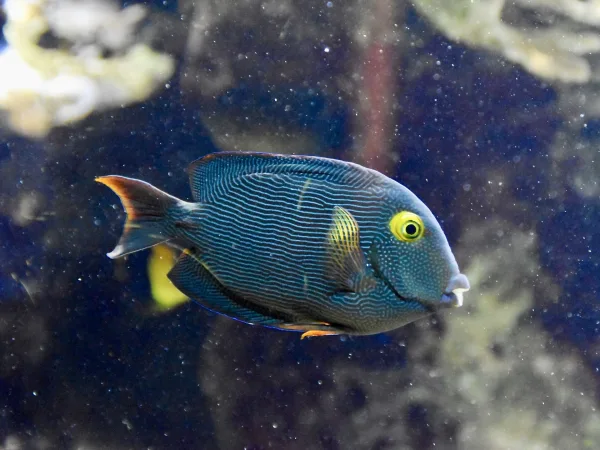
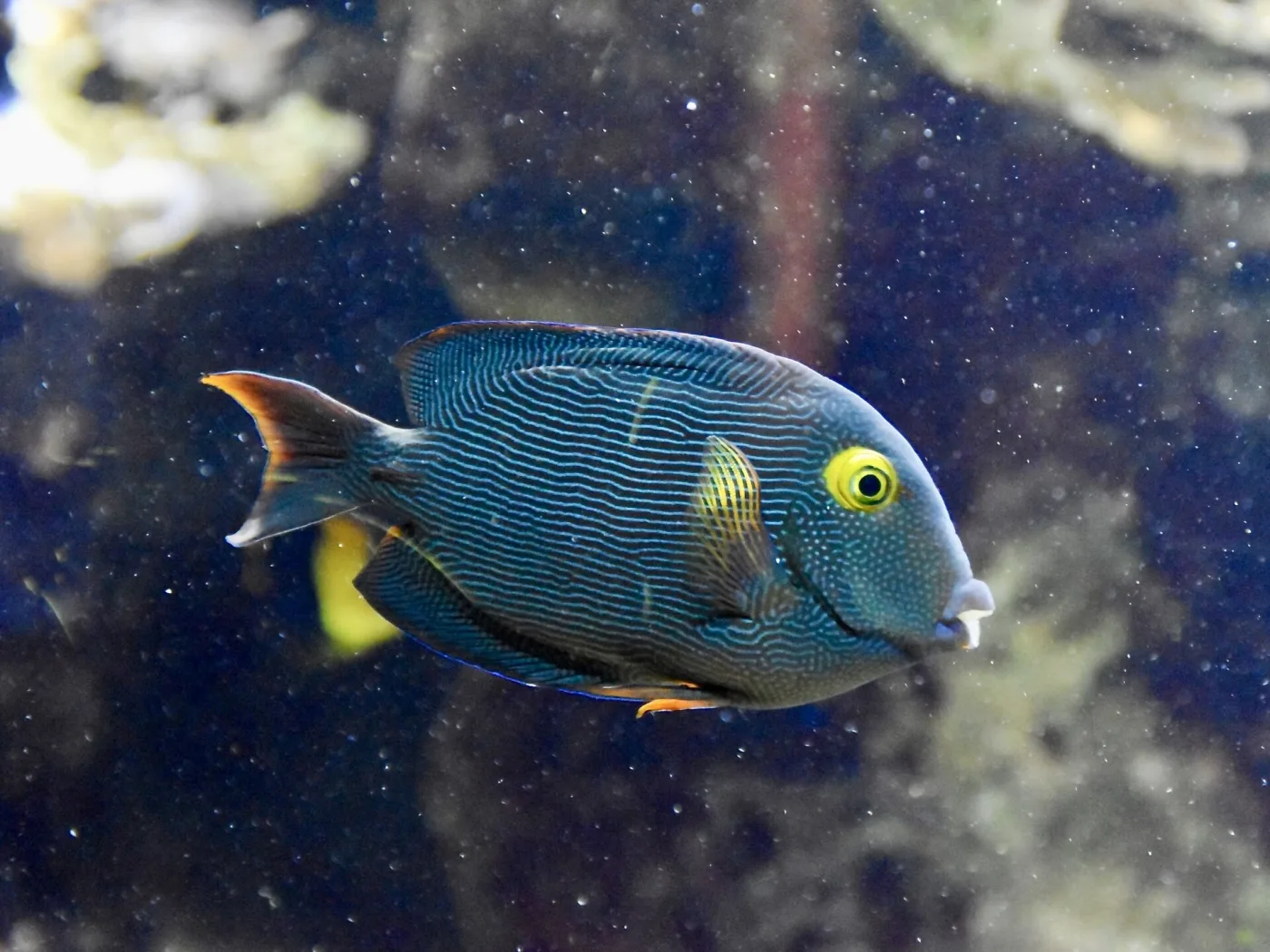
Kole Tang
Ctenochaetus strigosus
Also called Yellow Eye Tang, Kole Yellow Eye Tang, Goldring Bristletooth, Goldring Surgeonfish, Spotted Surgeonfish, Spotted Bristletooth, Yellow-eyed Surgeonfish, Kole (Hawaiian)
- CareModerate
- Reef safeYes
- TemperamentSemi-aggressiveFairly peaceful; fights other tangs and look-alikes
- Favorite foods
- Film algae / diatoms
- Nori / seaweed sheets
- Spirulina / herbivore pellets
- Max size7 in (18 cm)
- Min tank75 gal
- LifespanNot well documented
- IUCN statusLeast Concern
Quick answers
- How big does the Kole Tang get?
- Up to 7 in (18 cm).
- What size tank does it need?
- At least 75 gallons.
- How hard is it to keep?
- Care level: Moderate.
- Is it reef safe?
- Yes. Does not harm corals or other sessile invertebrates.
- What does it eat?
- Film algae / diatoms
- Nori / seaweed sheets
- Spirulina / herbivore pellets
- How long does it live?
- Not well documented.
- What are good tankmates?
- Clownfish
- Gobies, blennies and cardinalfish
- Wrasses and anthias
- Dwarf angelfish
- A differently shaped tang (such as a yellow tang) in a large tank
The 30-second version
The kole tang is a brown fish with thin blue lines all over. It has a bright gold ring around each eye, like it is wearing gold goggles. In the wild it lives only around Hawaii and one other small island in the Pacific. Its teeth are shaped like a tiny comb or brush. It sweeps them over rocks and sand to pick up the thin, fuzzy layer of algae and food bits that covers everything. That makes it a great little cleaner in a fish tank. It grows to about 7 inches, which is small for a tang. Kole tangs get along with most fish, but not with other tangs. Hawaii stopped people from catching reef fish for fish tanks, so real kole tangs are hard to find now. Stores often sell look-alike cousins instead.
Water & care
A hardy, useful tang for medium-large reef tanks once it is eating, but it needs an established system (new tanks are too clean to feed it), at least 75 gallons, brisk well-oxygenated water with low nutrients, and a steady supply of algae-based foods on top of what it grazes. Keep only one, and do not mix it with similar-shaped bristletooth tangs. Check that you are actually buying C. strigosus if the species matters to you.
| Parameter | Keep it at | Where that sits on the usual reef range |
|---|---|---|
| Temperature | 72–78 °F | |
| Salinity (SG) | 1.020–1.025 | |
| pH | 8.1–8.4 | |
| Alkalinity | 8–12 dKH | |
| Calcium | 350–450 ppm | |
| Magnesium | 1,150–1,350 ppm | |
| Nitrate | 0–30 ppm | |
| Phosphate | 0–0.1 ppm |
Ranges are LiveAquaria's general marine fish guidelines; the LiveAquaria kole page gives the same temperature, pH, dKH and specific gravity. Calcium and magnesium matter for the tank rather than the fish. Reef Builders notes this species prefers highly oxygenated water with low dissolved nutrients, so frequent water changes and strong skimming help. In a coral reef, keep specific gravity 1.023-1.025 and nutrients as low as your corals need. Wild water is about 70-81 °F (21-27 °C).
Feeding
DietHerbivore
Favorite foods
- Biofilm, diatoms and detritus grazed from rock, sand and glass
- Dried marine seaweed (nori and other algae sheets) on a clip or tied to a rock
- Spirulina and algae-based pellets and flakes
- Frozen herbivore formulas
- Small amounts of meaty foods such as mysis
It grazes continuously, so a mature tank with plenty of rock surface is the foundation of its diet. Add algae-based foods every day, offering seaweed at least three times a week (LiveAquaria) along with herbivore pellets or frozen food. Nori alone is not a complete long-term diet. It will also take meaty foods, but they should be a small part of the menu.
Tank & maintenance
- Minimum tank
- 75 gallons
- Aquascape
- Lots of mature live rock surface to graze, with open space to swim. Add it only to an established tank.
- Lighting
- No special needs; normal reef lighting helps keep a grazing film growing.
- Water flow
- Brisk water movement with high dissolved oxygen.
Routine upkeep
Frequent partial water changes and vigorous protein skimming to keep nutrients low and oxygen high. Avoid scraping every bit of film algae off the back and side glass, because it is food. Feed algae-based foods daily and watch its belly: a hollow belly means it is not getting enough.
Temperament & tankmates
TemperamentSemi-aggressive
Generally peaceful with most fish, but it fights with fish of similar shape, diet or niche, especially other tangs and other bristletooths. Two kole tangs rarely coexist. Very aggressive tankmates can bully it.
Reef safeYes
Does not harm corals or other sessile invertebrates. It grazes diatoms, film algae and detritus from rock, sand and glass all day, which makes it a helpful part of an algae-control team.
Good tankmates
- Clownfish
- Gobies, blennies and cardinalfish
- Wrasses and anthias
- Dwarf angelfish
- A differently shaped tang (such as a yellow tang) in a large tank
- Corals and invertebrates
Avoid
- Other bristletooth tangs (Ctenochaetus) and a second kole tang
- Very aggressive fish that will bully it
- Newly set-up tanks with little biofilm or algae to graze
Help it thrive
- Add it to a tank that has been running for months, not weeks, so there is biofilm and detritus to graze.
- Quarantine first, as with all tangs, to avoid bringing ich or velvet into the display.
- Supplement grazing with varied algae foods every day; nori alone is not enough.
- Keep only one bristletooth tang per tank.
- Keep oxygen high and nutrients low with strong skimming and regular water changes.
Common ailments
Marine ich (white spot, Cryptocaryon irritans)
- Signs
- Salt-grain white spots, scratching on rocks, rapid breathing, cloudy eyes and poor appetite.
- Prevention
- Quarantine all new fish and keep water stable.
- Treatment
- Treat in a hospital tank with copper or chloroquine phosphate (follow the product's directions), hyposalinity (SG about 1.009) or the tank-transfer method; never in a reef display. Leave the display fishless long enough for the parasite to die out (its cyst stage can last up to about 72 days).
Head and lateral line erosion (HLLE)
- Signs
- Pits and eroded patches on the face and along the lateral line; bristletooth tangs are among the surgeonfish that develop it in captivity.
- Prevention
- Varied diet, good water quality and avoiding dusty lignite activated carbon.
- Treatment
- Remove lignite carbon, make large water changes and improve diet; moving the fish to an aquarium that has never had HLLE is the most commonly reported cure.
Starvation in immature tanks
- Signs
- Hollow or pinched belly, visible backbone outline and loss of color, even though the fish is always grazing.
- Prevention
- Only add it to established tanks with plenty of grazing surface, and feed algae-based foods daily.
- Treatment
- Increase feedings with varied herbivore foods several times a day; move it to a more mature system if it keeps losing weight.
This is general hobby guidance, not veterinary advice. Quarantine new arrivals and treat in a separate tank whenever you can.
Risks of owning one
- Sharp tail spines can cut hands during netting or maintenance.
- Mislabeling is common: many fish sold as kole tangs are other Ctenochaetus species with slightly different looks and maximum sizes.
- It slowly starves in new or very clean tanks that lack grazing film.
- Like other tangs, it can bring ich or velvet into a display if it is not quarantined.
- Ciguatera has been reported from wild fish, so it should not be eaten.
Breeding
DifficultyNot achieved Captive-bredRare or wild-caught
In the wild it spawns in pairs and releases pelagic eggs. We found no documented captive rearing of this species, and no captive-bred kole tangs in the trade. Several related surgeonfish (the yellow tang, the blue hippo tang and, in 2024, the convict tang) have now been hatchery-reared by research institutes and commercial breeders using live copepod larval foods over about two months, which would be the starting point for any attempt.
Deep dive The science, history and family tree
The science
Ctenochaetus strigosus is a small bristletooth surgeonfish (family Acanthuridae) with a compressed, oval body and a small mouth lined with numerous flexible, comb-like teeth. The dorsal fin has 8 spines and 25-28 soft rays, and the anal fin has 3 spines and 22-25 soft rays. Adults are purplish to dark brown with many slender light-blue longitudinal lines that break into small spots on the head, and a conspicuous yellow ring around each eye; the tail becomes deeply lunate in mature fish. The maximum published size is about 15 cm standard length (about 7 inches total length). The species is endemic to the Hawaiian Islands and Johnston Atoll in the central Pacific. It is benthopelagic over coral, rock and rubble from 1 to 113 m depth, usually solitary and active by day, in water of about 21-27 °C. It feeds by sweeping its brush-like teeth across the bottom as it closes its mouth, taking in detritus, diatoms and fine algae; like its close Acanthurus relatives it has a thick-walled, gizzard-like stomach. It spawns in pairs, and its eggs and larvae are pelagic. Ciguatera poisoning has been reported from this species. It is listed as Least Concern by the IUCN. Before Hawaii closed commercial aquarium collection it was one of the most heavily collected aquarium fishes in the islands, and molecular studies place Ctenochaetus inside the genus Acanthurus.
- Appearance
- Brown to purplish-brown oval body with fine light-blue horizontal lines that turn into small spots on the face, and a bright gold or yellow ring around each eye. Adults develop a crescent-shaped (lunate) tail with pointed tips. LiveAquaria notes that juveniles are lighter, yellow-gold to tan, and darken as they mature. Look-alikes: the Indian Ocean squaretail bristletooth (Ctenochaetus truncatus), now often sold as 'Indian Gold Ring' or under the kole name, has a flat-edged tail, a smaller yellow eye ring and small spots over the body; the lined bristletooth (C. striatus) has similar wavy blue lines but orange spots on the head, no bold gold eye ring, and grows larger (about 26 cm).
- Native range
- Endemic to the Hawaiian Islands and Johnston Atoll in the central Pacific Ocean. Fish sold as 'kole' from the Indian Ocean or the western Pacific are other Ctenochaetus species.
- Habitat
- Reef slopes and flats over coral, rock and rubble from 1 to 113 m (about 3-370 ft), usually alone and active by day. Water about 21-27 °C (70-81 °F).
- Size
- 7 in (18 cm). FishBase gives a maximum of 15.4 cm standard length (snout to tail base, excluding the tail fin); LiveAquaria and Reef Builders give about 7 in (18 cm) total length. One of the smaller tangs.
- Lifespan
- Not well documented. Hobby care guides commonly give about 6-10 years in aquariums, with some claiming much longer; no published age study of this species was found.
- Conservation
- Least Concern. IUCN Least Concern (FishBase gives a 2010 assessment; Wikipedia cites 2012). Not listed by CITES. Because it is a Hawaiian endemic, true kole tangs have been essentially unavailable since Hawaii's commercial aquarium collection was halted (2017 Umberger ruling, statewide halt by December 2020). Proposals in 2025-2026 to reopen West Hawaii collection were sent back by the Land Board in August 2026, so collection remains closed. Most fish sold as kole tangs today are look-alike Ctenochaetus species from other regions, mainly the Indian Ocean squaretail bristletooth
In the aquarium vs in the wild
In your aquarium
A reef-safe algae-control and 'clean-up' fish that keeps rock and sand surfaces free of film algae, diatoms and detritus, and a smaller tang option for medium-large tanks.
On the reef
A detritivore that sweeps fine sediment, detritus and microalgae off reef surfaces, cycling organic material on Hawaiian reefs. It is also important to recreational fisheries in Hawaii.
History
Edward Turner Bennett described the species in 1828 as Acanthurus strigosus, from the 'Sandwich Islands' (Hawaii). Theodore Gill created the genus Ctenochaetus for it in 1884. The name strigosus means 'slender', probably referring to its many thin, bristle-like teeth, and Ctenochaetus loosely means 'comb bristle'. For decades the kole was one of the most common surgeonfish in the aquarium hobby and one of the most heavily collected aquarium fishes in Hawaii. When Hawaii's commercial aquarium fishery was shut down after the 2017 Umberger decision and later court rulings, the supply was cut off, and the Indian Ocean squaretail bristletooth became the usual stand-in. The 2025-2026 proposal to reopen West Hawaii collection covered five species (yellow tang, Potter's angelfish, mailili, hinalea iiwi and Thompson's surgeonfish) and did not include the kole; in August 2026 the Land Board sent it back for more work without approving it.
Evolution & relatives
Bristletooth tangs (Ctenochaetus) belong to the surgeonfish tribe Acanthurini together with the Acanthurus surgeonfishes. A nine-gene timetree (Sorenson et al. 2013) found that Acanthurus is not a natural group without Ctenochaetus: the bristletooths form a clade with Acanthurus nubilus and A. pyroferus (the mimic tang), and the thick-walled, gizzard-like stomach shared by these fishes evolved only once. The authors recommended merging Ctenochaetus into Acanthurus, although WoRMS still accepts Ctenochaetus as a genus. The surgeonfish subfamily Acanthurinae arose about 42 million years ago, with most living species appearing since the Early Miocene (about 21 million years ago). The kole's isolated Hawaiian range is typical of the many endemic reef fishes that evolved in the remote Hawaiian archipelago.
Family tree, from kingdom down
- Kingdom Animalia Animals Animals are living things made of many cells that must eat food to live. Fish, corals, crabs, snails and sea stars are all animals.
- Phylum Chordata Chordates Chordates have a stiff rod running down their back at some point in their lives. In fish and people, this rod is replaced by a backbone.
- Subphylum Vertebrata Vertebrates Vertebrates are animals with a backbone and a skull. Fish, frogs, birds and people are all vertebrates.
- Infraphylum Gnathostomata jawed vertebrates
- Parvphylum Osteichthyes bony fishes
- Gigaclass Actinopterygii ray-finned fishes
- Superclass Actinopteri
- Class Teleostei Teleost fishes Teleosts are bony fishes with thin, bendy fin rays and jaws that can push forward. Almost all of the fish in the world are teleosts.
- Order Acanthuriformes Surgeonfishes, angelfishes and kin This order of fishes includes surgeonfishes, marine angelfishes and rabbitfishes. Many have deep, flat bodies and graze on reefs.
- Family Acanthuridae Surgeonfishes and tangs Surgeonfishes have a sharp spine, like a tiny knife, on each side of the tail. Most graze on algae on reefs.
- Genus Ctenochaetus Bristletooth tangs Bristletooth tangs have bendy, comb-like teeth. They brush algae and bits of food off rocks and sand.
- Species Ctenochaetus strigosus
See it on the Tree of Life Compare with another species
Closest relatives
- Ctenochaetus truncatus Squaretail Bristletooth (Indian Gold Ring Tang) Same genus; Indian Ocean look-alike now sold in its place
- Ctenochaetus striatus Lined Bristletooth Same genus; similar lined pattern but orange head spots and a larger size
- Ctenochaetus hawaiiensis Chevron Tang Same genus; also found in Hawaii
- Ctenochaetus tominiensis Tomini Tang Same genus
- Ctenochaetus binotatus Twospot Bristletooth Same genus
- Ctenochaetus flavicauda Whitetail Bristletooth Same genus
- Acanthurus pyroferus Mimic Tang (Chocolate Surgeonfish) Groups with Ctenochaetus in molecular studies (same clade within Acanthurini)
- Acanthurus leucosternon Powder Blue Tang Same tribe (Acanthurini) Read guide · Compare
Older scientific names: Acanthurus strigosus.
Fun facts
- Its teeth are flexible bristles that work like a comb or brush; the genus name Ctenochaetus loosely means 'comb bristle'.
- It has a thick, gizzard-like stomach for grinding up the sediment and detritus it swallows.
- It has been found as deep as 113 m (about 370 ft).
- The kole lives only in Hawaii and Johnston Atoll, while its look-alike, the squaretail bristletooth, lives across the Indian Ocean, so the two never meet in the wild.
- Some scientists think bristletooth tangs are really just specialized Acanthurus surgeonfish and should be moved into that genus.
Learn more
- FishBase: Ctenochaetus strigosus fishbase.se
- Wikipedia: Ctenochaetus strigosus en.wikipedia.org
- Reef Builders: The kole tang, a commendable surgeonfish for medium-sized aquariums reefbuilders.com
- Reef Builders: Kole tang and squaretail tang comparison reefbuilders.com
Sources
- WoRMS: Ctenochaetus strigosus (Bennett, 1828) marinespecies.org
- FishBase species summary: Ctenochaetus strigosus fishbase.se
- Wikipedia: Ctenochaetus strigosus en.wikipedia.org
- LiveAquaria: Kole Yellow Eye Tang (product page) liveaquaria.com
- LiveAquaria: Proper water parameters for home aquariums liveaquaria.com
- Reef Builders: The kole tang, a commendable surgeonfish for medium-sized aquariums reefbuilders.com
- Reef Builders: Kole tang and squaretail tang comparison reefbuilders.com
- Sorenson et al. 2013, A multi-locus timetree of surgeonfishes (PubMed) pubmed.ncbi.nlm.nih.gov
- Civil Beat: A do-or-die moment for one of Hawaii's most contested trades (Mar 2026) civilbeat.org
- Hawaii Tribune-Herald: BLNR delays decision on aquarium fishing (Aug 2026) hawaiitribune-herald.com
- Wikipedia: Head and lateral line erosion en.wikipedia.org
- Wikipedia: Cryptocaryon en.wikipedia.org
- Wikipedia: Acanthuridae en.wikipedia.org
- Wikipedia: Ctenochaetus striatus (lined bristletooth) en.wikipedia.org
- CORAL Magazine: Captive-bred species first, convict tangs (2024) coralmagazine.com
Care facts
The care facts on this guide and its product pages (care level, reef safety, temperament, size, tank, diet, flow, purpose, foods, acclimation and origin) combine 12 independent sources, checked October 25, 2026.
- Kole Yellow Eye Tang LiveAquaria
- Kole Tang Aquarium Source (Alison Yang)
- Yellow Eye Kole Tang Quality Marine
- Kole Tang - Ctenochaetus strigosus That Pet Place
- Kole Tang (Ctenochaetus strigosus) Saltwater Aquarium Blog
- Kole Tang Care Guide - Ctenochaetus strigosus Reef Archive
- TANG - YELLOW EYE KOLE Aquatics Unlimited
- Ctenochaetus strigosus summary FishBase
- The Kole Tang: a commendable surgeonfish for medium sized aquariums Reef Builders
- Kole Tang Algae Grazer Care Gensou
- Tang - Yellow Eye Kole Aquatics Unlimited
- Innovative Marine AccuDrip Acclimation Kit - How To Bulk Reef Supply
Scientific names and classification follow the World Register of Marine Species (AphiaID 219658). Last updated October 25, 2026.
Shop this species
Search the shop →Sold out right now. We restock weekly, so check back soon.
Sold out