 Deal of the week
Aquacultured
Corals · Soft coral
Kenya Tree Coral
Capnella sp.
Also called Kenya tree, Cauliflower soft coral, Tree coral, Capnella, Kenya African tree coral
- CareEasy
- Reef safeYes
- TemperamentSemi-aggressiveReleases chemicals that stunt nearby corals
- Favorite foods
- Light (zooxanthellae)
- Phytoplankton
- Micro-plankton
- Min tank30 gal
- LifespanClonal and potentially indefinite
- IUCN statusNot Evaluated
Quick answers
- What size tank does it need?
- At least 30 gallons.
- How hard is it to keep?
- Care level: Easy.
- Is it reef safe?
- Yes. It has no sweeper tentacles, does not harm fish or invertebrates, and is considered one of the less chemically active soft corals (an AIMS field study used Capnella lacertiliensis to represent Capnella as 'a generally non-toxic genus', based on toxicity to fish).
- What does it eat?
- Light (zooxanthellae)
- Phytoplankton
- Micro-plankton
- How long does it live?
- Clonal and potentially indefinite: colonies keep growing and splitting off new trees, so aquarium strains are kept going for many years by fragging and natural branch drop.
- What are good tankmates?
- Other hardy soft corals (mushrooms, star polyps, zoanthids) kept a few inches away
- Peaceful reef fish such as clownfish, gobies, blennies and cardinalfish
- Cleanup crew snails, hermit crabs and cleaner shrimp
- Mixed soft-coral and LPS tanks with some space between colonies
The 30-second version
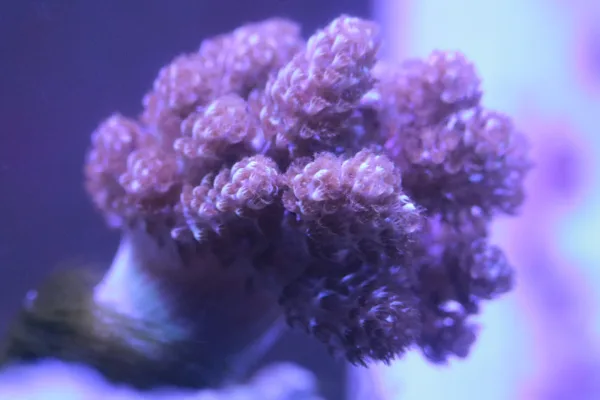
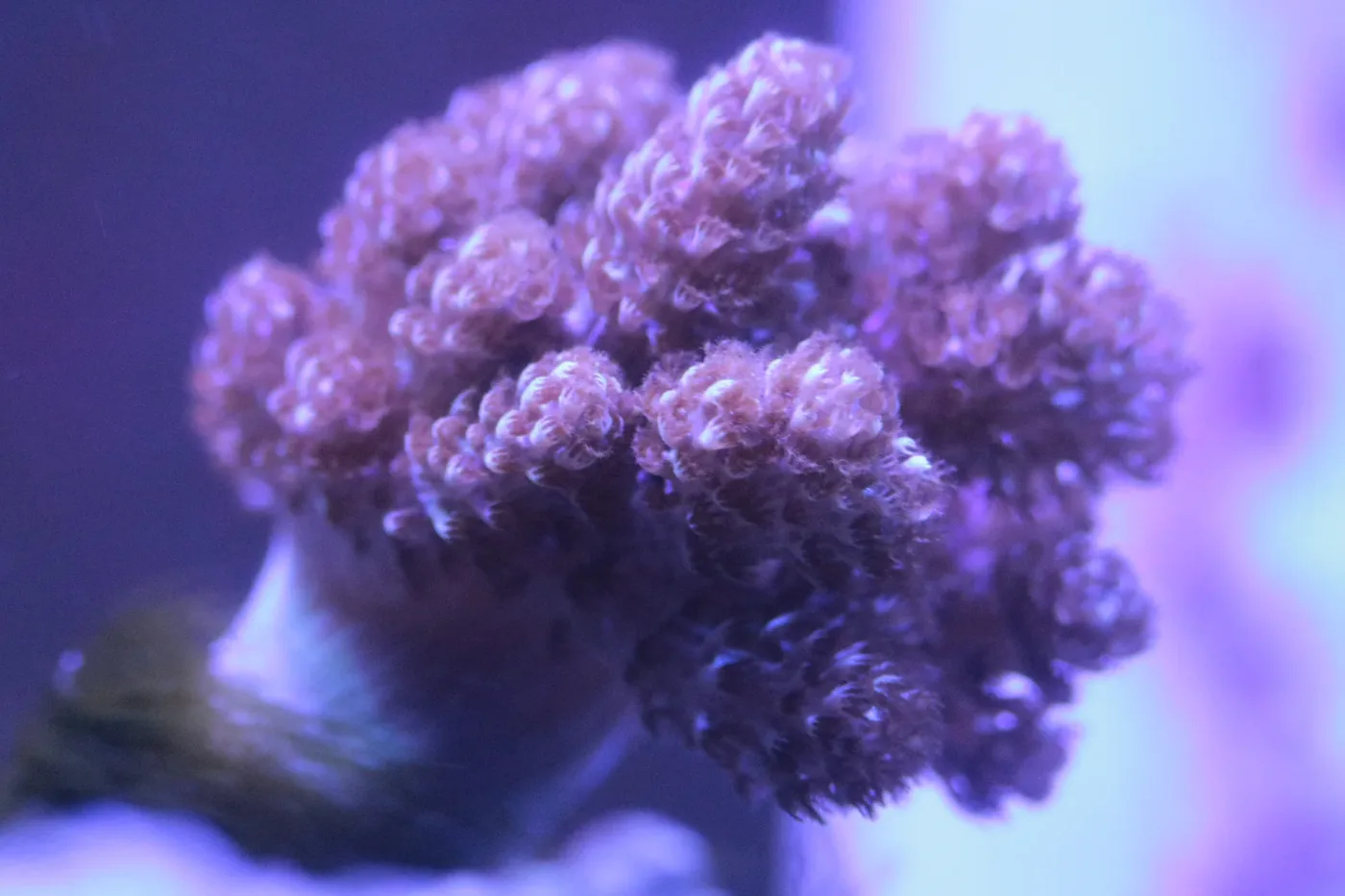
The Kenya tree coral looks like a little tree, or a soft head of cauliflower. It has a thick trunk and short, bendy branches. Tiny bumps called polyps cover the ends of the branches. Each polyp is a small animal with eight feathery arms. Tiny algae live inside the coral. They use light to make food and share it, so the coral mostly lives on light. A Kenya tree is soft and has no hard, stony skeleton. When it is upset, it can shrink and droop. Later it fills back up with water and stands tall again. It is one of the easiest corals to keep. It can even make new corals all by itself. A branch swells at the bottom, falls off, rolls away and sticks to a new rock. Keep an eye on it, or one day you may have a whole forest!
Water & care
Widely regarded as one of the best first corals: hardy, tolerant of a wide range of light and of nutrient-rich water, and not very prone to tissue-loss problems. Give it moderate light and moderate, indirect or alternating flow that sways the branches without blasting them. Expect the colony to deflate for a few hours or a day now and then; that is normal. The main work is managing its spread, because it sheds small branches that settle around the tank.
| Parameter | Keep it at | Where that sits on the usual reef range |
|---|---|---|
| Temperature | 74–80 °F | |
| Salinity (SG) | 1.023–1.026 | |
| pH | 8.1–8.4 | |
| Alkalinity | 8–12 dKH | |
| Calcium | 380–450 ppm | |
| Magnesium | 1,250–1,400 ppm | |
| Nitrate | 2–15 ppm | |
| Phosphate | 0.02–0.1 ppm |
Sources differ: LiveAquaria and Quality Marine give 72-78 F, SG 1.023-1.025 and 8-12 dKH; Reef Chasers gives 77-84 F, 8-9 dKH, 400-450 ppm calcium, nitrate 5-10 ppm and phosphate 0.05-0.1 ppm; a Gensou guide gives 25-27 C (77-81 F), 400-440 ppm calcium and 7-9 dKH. LiveAquaria advises keeping nitrate and phosphate as close to zero as possible, while other guides say it handles dirtier water well. Soft corals use little calcium and alkalinity, so stability matters more than exact numbers.
Feeding
DietPhotosynthetic
Favorite foods
- Light (photosynthesis by its symbiotic algae)
- Phytoplankton and fine particulate coral foods
- Microplankton such as rotifers
- Dissolved organic matter
Target feeding is not required; its zooxanthellae supply most of its energy and it also takes up small particles and dissolved nutrients. If you like, broadcast a little microplankton or a filter-feeder food once a week, especially in fishless tanks (LiveAquaria). It copes well with nutrient-rich water, so it rarely needs extra food in a stocked tank.
Tank & maintenance
- Minimum tank
- 30 gallons
- Aquascape
- Mount the frag on a rock or plug in the lower to middle rockwork with space around it, ideally on an island where dropped branches land on sand and can be collected. It can be placed almost anywhere, but keep it away from overflows and pump intakes, and downstream of more sensitive corals.
- Lighting
- Low to high; very adaptable. About 100-150 PAR is a good target (Reef Chasers suggests 100-200; other guides give 50-120 or say up to about 250). Acclimate gradually to strong light; very intense light can make it look shrivelled.
- Water flow
- Moderate, indirect or intermittent flow that sways the branches. Sources disagree (Reef Chasers and Fragbox prefer low to moderate; LiveAquaria and ORA prefer moderate to strong), but all warn against a direct blast, which keeps the polyps closed. Too little flow lets detritus settle and can also make the colony shrivel.
Routine upkeep
Every month or two, look for dropped branches or 'babies' that have settled in the rockwork and pull or cut them out before they attach firmly; prune the colony if it starts shading neighbours. Baste detritus off the branches, keep activated carbon running in mixed reefs, and wear gloves when cutting or handling it.
Temperament & tankmates
TemperamentSemi-aggressive
Sources disagree. Fragbox calls it peaceful and says it can affect hard corals on contact; LiveAquaria lists it as semi-aggressive and recommends space between it and other corals; Reef Chasers labels it aggressive in one section and 'not really aggressive' in another. We rate it peaceful because it does not sting and is among the least toxic soft corals, but it can shade or crowd neighbours as it spreads. It can itself be stung by aggressive LPS placed too close.
Reef safeYes
It has no sweeper tentacles, does not harm fish or invertebrates, and is considered one of the less chemically active soft corals (an AIMS field study used Capnella lacertiliensis to represent Capnella as 'a generally non-toxic genus', based on toxicity to fish). Still, as a soft coral it releases some terpenoid compounds, can affect stony corals it touches, and its dropped branches can settle among other corals and shade them. Give it a few inches of space, keep sensitive SPS upstream, and run activated carbon in mixed reefs.
Good tankmates
- Other hardy soft corals (mushrooms, star polyps, zoanthids) kept a few inches away
- Peaceful reef fish such as clownfish, gobies, blennies and cardinalfish
- Cleanup crew snails, hermit crabs and cleaner shrimp
- Mixed soft-coral and LPS tanks with some space between colonies
Avoid
- Slow-growing SPS directly downstream or within reach of dropped branches
- Aggressive LPS such as torch, hammer, frogspawn and Galaxea within sweeper range
- Coral-nipping fish such as many butterflyfish and some angelfish
- Placing it where shed branches can roll into the overflow or pump intakes
Help it thrive
- Give it moderate, indirect flow; a direct powerhead blast keeps it closed and shrunken.
- Do not panic when it deflates and droops for a few hours; it is normal and it will pump itself back up.
- Place it on an island rock so dropped branches land on sand where you can collect them.
- Keep sensitive SPS upstream and run carbon if you keep many soft corals together.
- Moderate light is plenty; acclimate gradually if you move it higher.
- Trade colonies or fragments you remove to other hobbyists instead of letting the tank turn into a forest.
Common ailments
Shrivelling or staying deflated
- Signs
- The colony stays shrunken and droopy for more than a day or two, with polyps closed.
- Prevention
- Stable salinity and alkalinity, moderate indirect flow, and gradual changes in light.
- Treatment
- Check ammonia, salinity and alkalinity; reduce a direct blast or add flow if the spot is stagnant; lower or move it if the light was increased suddenly. Baste detritus off the branches. A healthy colony usually recovers within days.
Unwanted spread
- Signs
- Small new trees appear in the rockwork, overflow or around other corals.
- Prevention
- Island placement over sand, and regular checks for dropped branches.
- Treatment
- Cut new colonies at the base and remove them; some keepers dab kalkwasser paste on the cut base to stop regrowth. Rehome or sell the pieces.
Tissue decay at the base or on branches
- Signs
- Soft, mushy or discoloured patches, often after damage, poor flow or a parameter swing; bits may slough off.
- Prevention
- Good flow, stable water, and careful handling when fragging.
- Treatment
- Cut away the decaying part with clean scissors well into healthy tissue, improve flow, and check water quality. Remove dead pieces promptly so they do not foul the water.
Film algae or detritus on the colony
- Signs
- Brown or green film on the trunk and branches; polyps stay closed.
- Prevention
- Adequate flow and reasonable nutrient control.
- Treatment
- Baste the colony clean, increase flow around it, and address excess nutrients and lighting imbalances.
This is general hobby guidance, not veterinary advice. Quarantine new arrivals and treat in a separate tank whenever you can.
Risks of owning one
- It reproduces by dropping branches that settle around the tank, and a single colony can spread into a forest that shades other corals and is tedious to remove.
- Like other soft corals it releases terpenoid compounds; it is considered mild, but in tanks with many soft corals carbon is recommended to protect stony corals.
- Shed branches can be sucked into overflows or pump intakes.
- As a living cnidarian, it should be handled with gloves, and hands washed afterwards.
Propagation & fragging
DifficultyEasy AquaculturedWidely available
Propagated asexually. The colony does much of the work itself: a swelling forms at the base of a branch, the branch drops off, drifts and attaches to new rock. Keepers can also cut branches and attach them to plugs. Sexual reproduction is not done in home aquaria.
- Wear gloves and work over a container of tank water.
- Cut a branch near its base with clean, sharp scissors or a scalpel; the colony is firm, so a clean cut works better than tearing.
- Hold the cutting against a frag plug or rubble with a rubber band, toothpick, mesh or a cup of rubble; glue does not stick well to slimy soft-coral tissue.
- Put the frag in moderate light and gentle to moderate flow; it may stay shrunken for a few days.
- Remove the band once the base has attached, usually within a week or two.
- Or simply collect naturally dropped branches and let them settle in a rubble tray.
Deep dive The science, history and family tree
The science
Capnella Gray, 1869 is a genus of zooxanthellate soft corals (Octocorallia: Malacalcyonacea) and the type genus of the family Capnellidae, which McFadden, van Ofwegen and Quattrini erected in their 2022 genome-scale revision of octocoral classification (WoRMS now dates the family name to their 2024 erratum); the genus was formerly placed in Nephtheidae, and Paranephthya Studer, 1887 is a junior synonym. WoRMS lists about 20 accepted species, with C. imbricata (Quoy & Gaimard, 1833) as the type species. Colonies are arborescent: a firm, sterile trunk divides into short branches that end in lobes or catkin-like clusters of polyps. The polyps are incurved and not retractile, armoured with club-shaped anthocodial sclerites, and the surface of the coenenchyme contains capstans and related sclerite forms. Colonies are usually whitish, grey or brown, often with darker polyps; they grow paler in stronger light and flatter, with shorter branches, in strong current. The genus is widespread in the tropical Indo-Pacific, from the African coast to the western Pacific, on clear-water reef slopes, in current-swept shallows and on shaded rubble near shore. It also reaches temperate seas: C. gaboensis is abundant in south-eastern Australia, where it gains carbon from its symbiotic dinoflagellates but also needs heterotrophic food. Asexual reproduction by fission is well documented: a swelling forms at the base of a branch, the branch detaches, drifts, and can attach firmly to new substrate within about a day. Capnella species produce capnellane sesquiterpenes (capnellenes), a skeleton class reported in 1976 and since isolated repeatedly from C. imbricata, which are studied for anti-inflammatory and pain-relieving (antinociceptive) activity. In a Great Barrier Reef competition experiment, C. lacertiliensis was chosen to represent Capnella as 'a generally non-toxic genus' (judged by toxicity to fish), in contrast to diterpene-rich Sarcophyton.
- Appearance
- A small, firm 'tree' with a smooth, pale trunk and short branches tipped with clusters of polyps, like a head of cauliflower or broccoli. Wild-type colonies are cream, grey, tan or brown, often with darker brown polyps; aquacultured strains include mint-green, pink and purplish forms. When it deflates the whole colony shrinks and droops, then pumps itself up with water again, so its size and shape change through the day. Look-alikes: the brown 'Kenya trees' and the 'super green' Kenya tree sold in the trade are usually Litophyton (family Nephtheidae), which has longer, softer branches and polyps on more open, finger-like twigs; colourful Dendronephthya and Scleronephthya carnation corals are non-photosynthetic and very hard to keep; Sinularia and finger leathers are tougher and leathery. In the hobby, 'Kenya tree' is used loosely, and Capnella is often confused with Litophyton, especially as small frags.
- Native range
- Tropical Indo-Pacific, from the coast of East Africa to the western Pacific; trade colonies come mostly from Indonesia or from aquaculture. Some species live in temperate waters, such as C. gaboensis in south-eastern Australia (Sydney Harbour material), and South African species are also described.
- Habitat
- Reef slopes in clear water, from deeper water up into shallows with strong tidal currents, and also shaded spots and coral rubble in shallow water near shore. Colonies anchor to hard substrate; growth form varies with current (flatter and shorter in strong flow) and light (paler in brighter light). As zooxanthellate corals, most species are limited to well-lit water.
- Size
- . Colony size varies by species and conditions, and no reliable maximum is published for the genus. CoralTraits, from Fabricius & Alderslade (2001), gives a colony width of about 10 cm (4 in) for C. imbricata. Aquarium colonies sold as Kenya trees range from 1-7 in at purchase (LiveAquaria) and keep growing and budding, so a single colony can turn into a patch of many trees.
- Lifespan
- Clonal and potentially indefinite: colonies keep growing and splitting off new trees, so aquarium strains are kept going for many years by fragging and natural branch drop.
- Conservation
- Not Evaluated. No IUCN Red List assessment was found for the genus or for common species. Soft corals such as Capnella are not CITES-listed. Much hobby stock is aquacultured or maricultured (LiveAquaria lists Indonesian and maricultured sources), and it propagates so readily that wild collection is unnecessary for most buyers
In the aquarium vs in the wild
In your aquarium
An easy, fast-growing beginner coral used to add height and gentle movement to a reef, often one of the first corals in a new tank, and a constant source of free frags for trading.
On the reef
A space-competing soft coral on reef slopes and current-swept shallows. Its zooxanthellae make it a primary producer, and in temperate Australia C. gaboensis is an abundant part of rocky-reef communities, combining photosynthesis with feeding on particles and dissolved organic matter.
History
John Edward Gray named Capnella in 1869 in his notes on the fleshy alcyonoid corals, with Alcyonium imbricatum Quoy & Gaimard, 1833 (now C. imbricata) as its type. For more than a century it was placed in the family Nephtheidae, and many species were described by Verseveldt in the 1970s. Easy, cheap and quick to grow, the Kenya tree became a staple beginner coral and one of the most commonly traded soft corals, although the trade name is used for several tree-like soft corals and is often attached to Litophyton. Chemists have studied Capnella since the 1970s, when its unusual capnellane sesquiterpenes were first reported.
Evolution & relatives
Octocorals are one branch of the Anthozoa, and their history goes back hundreds of millions of years. In 2022 McFadden, van Ofwegen and Quattrini used genome-scale data to split octocorals into two orders: Malacalcyonacea (most soft corals and many sea fans) and Scleralcyonacea (sea pens, blue coral, precious coral and star polyps). They also broke up the old family Nephtheidae and placed Capnella in its own family, Capnellidae, together with cold-water genera such as Drifa and Duva from the North Atlantic. So the Kenya tree is not especially close to the look-alike Litophyton, which stays in Nephtheidae, and despite its tropical look its family-mates include cold-water 'carnation corals' of the North Atlantic.
Family tree, from kingdom down
- Kingdom Animalia Animals Animals are living things made of many cells that must eat food to live. Fish, corals, crabs, snails and sea stars are all animals.
- Phylum Cnidaria Cnidarians Cnidarians are soft animals with tentacles. The tentacles have tiny stinging cells. Corals, sea anemones and jellyfish all belong here.
- Subphylum Anthozoa Corals and sea anemones These cnidarians spend their whole lives as polyps: a tube with a mouth ringed by tentacles. Unlike jellyfish, they never swim around as a bell-shaped medusa.
- Class Octocorallia Octocorals Each octocoral polyp has exactly eight feathery tentacles. Soft corals, sea fans and sea pens belong here.
- Order Malacalcyonacea Soft corals and sea fans This order holds most soft corals, such as leather corals and Kenya trees, plus many sea fans. Scientists named it in 2022 after studying octocoral DNA.
- Family Capnellidae Kenya tree corals and kin This family of soft corals was named in 2022. It joins tree-shaped Kenya tree corals with some soft corals from cold northern seas.
- Genus Capnella
See it on the Tree of Life Compare with another species
Closest relatives
- Capnella imbricata Kenya tree coral Same genus; the type species, widespread in the Indo-Pacific and the source of most capnellene research
- Capnella gaboensis Temperate soft coral Same genus; abundant in temperate south-eastern Australia
- Capnella lacertiliensis Kenya tree coral Same genus; Great Barrier Reef species used to represent the generally non-toxic genus Capnella in AIMS competition experiments
- Duva florida Flowery carnation coral Same family (Capnellidae); a cold-water North Atlantic soft coral
- Drifa glomerata Orb carnation coral Same family (Capnellidae); a cold-water North Atlantic soft coral
- Litophyton Brown Kenya tree, tree coral Look-alike sold under the same trade name; same order, different family (Nephtheidae)
Older scientific names: Paranephthya.
Fun facts
- A Kenya tree can drop its own branches on purpose; each one rolls away, sticks to a rock and grows into a new tree, sometimes rooting within a day.
- The colony can deflate like a balloon and later pump itself back up with water, so it may look half its size in the morning and full again by evening.
- Its polyps cannot pull back inside the branches; they curl inward instead, protected by tiny club-shaped mineral spikes.
- Capnella gave its name to the capnellenes, a family of chemicals scientists study for anti-inflammatory and pain-relieving effects.
- Despite looking tropical, it shares its family with cold-water 'carnation corals' from the North Atlantic, such as Duva and Drifa.
Learn more
- LiveAquaria: Kenya Tree Coral (Capnella sp.) liveaquaria.com
- Reef Chasers: Kenya Tree Coral care overview reefchasers.com
- Wikipedia: Capnella en.wikipedia.org
- WoRMS: Capnella Gray, 1869 marinespecies.org
Sources
- WoRMS: Capnella Gray, 1869 marinespecies.org
- Wikipedia: Capnella en.wikipedia.org
- Reef Corals of the Indo-Malayan Seas: genus Capnella indo-malayan-reef-corals.linnaeus.naturalis.nl
- CoralTraits: Capnella imbricata colony width (Fabricius & Alderslade 2001) coraltraits.org
- Farrant et al. 1987, Nutrition of the temperate Australian soft coral Capnella gaboensis I (Marine Biology 95: 565-574) link.springer.com
- Farrant et al. 1987, Nutrition of the temperate Australian soft coral Capnella gaboensis II (Marine Biology 95: 575-581) link.springer.com
- AIMS dataset: Competition between alcyonacean and scleractinian corals at Britomart Reef researchdata.edu.au
- Capnellenes from Capnella imbricata (Pharmaceuticals 2023) pmc.ncbi.nlm.nih.gov
- LiveAquaria: Kenya Tree Coral liveaquaria.com
- Reef Chasers: Kenya Tree Corals reefchasers.com
- Fragbox: Kenya Tree Coral care fragbox.ca
- Quality Marine: Kenya Tree (Capnella sp.) qualitymarine.com
- ORA: Capnella orafarm.com
- Gensou: Kenya Tree Coral care guide gensou.sg
- Reef Builders: Super green Kenya tree soft coral (Litophyton) reefbuilders.com
Care facts
The care facts on this guide and its product pages (care level, reef safety, temperament, size, tank, diet, flow, purpose, foods, acclimation and origin) combine 13 independent sources, checked October 25, 2026.
- Kenya Tree Coral LiveAquaria
- Kenya Tree Coral Care Overview Reef Chasers
- Kenya Tree Coral Fragbox
- Kenya Tree Coral Quality Marine
- Pink Kenya Tree LRG Biota
- Kenya Tree Coral Care Guide: Capnella spp. Saltwater Aquarium Blog
- Kenya Tree coral (Capnella) Tropical Fish Keeping
- Capnella imbricata (Kenya African Tree) Salt Corner (Bob Goemans)
- Kenya Tree Coral Build Your Aquarium
- Kenya Tree Coral Care & Growing Fantasea Aquariums
- Kenya Tree The Coral Centre
- Kenya Tree Coral LiveAquaria
- Kenya Tree Coral Care Guide: The Soft Coral That Grows Itself Gensou Aquascaping
Scientific names and classification follow the World Register of Marine Species (AphiaID 146763). Last updated October 25, 2026.
Shop this species
Search the shop →
Deal of the week
Aquacultured